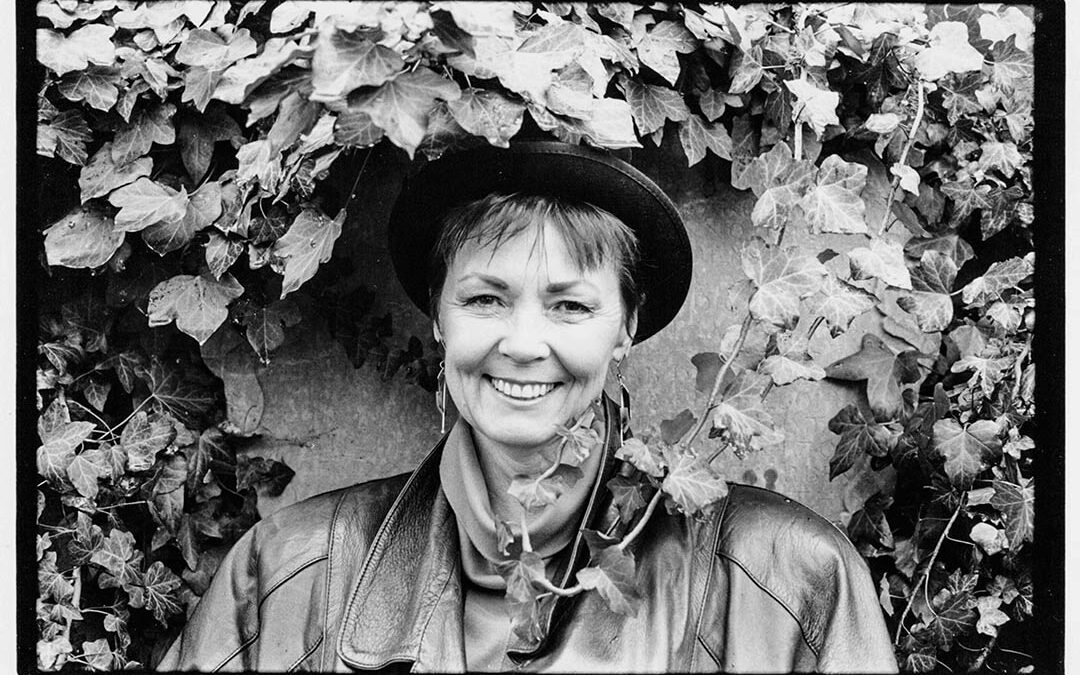
First published in The Study of Light, on Substack, on August 19, 2025
I took a first trip to South America last summer. It was winter there in Peru, but Peru borders the equator on its northern tip, so while it was cool and cloudy, it was nothing like the winters I experience on the 45th parallel, up here in Wisconsin/Minnesota.
I was part of the delegation of the La Crosse Synod of the ELCA Lutheran church. And like I do everywhere I go, I visited a cemetery. I had been in Lima and Cusco thirteen days already. The first ten days, I followed our group’s itinerary. There were some preselected sightseeing spots, a short trip to Machu Pichu. When the group left, I had three days to explore Lima with my friend Irene, then one day on my own. On the last full day, always thinking of how I hadn’t visited a graveyard yet, I made a plan. The hope was to see something of substance, something real and Peruvian and not so touristy. I needed to stay within some time and distance limits, e.g. no more than three hours walk away, no more than ten miles round trip. And I needed to respect that Lima had a few areas that were generally safe for the solo gringo who didn’t speak Spanish, and many areas that were not. Where was this cemetery, exactly?
I found one on the map that looked like it fit the bill. Near the coast, where I was. About four miles away. In a rough looking neighborhood that bordered on a safer neighborhood. I set out that morning, with a backpack and a camera, a crude map and a couple dozen Spanish words. The first leg I knew well enough. That area is situated atop the ocean bluff, much like Santa Monica in Los Angeles. I could walk to the cliff’s edge, and enjoy the ocean winds, friendly streets, easy, tasty food along the way. Then, at the edge of posh Barranco I crossed a boulevard into new territory.
A tourist in Lima is cautioned not to go here, and not to go there. He or she should speak Spanish, and have a guide, perhaps even a driver. The way that I have traveled in other parts of the world, (just picture me dancing down the road singing Zip-a-dee-doo-dah) well, I really ought not try to do that. I am not equal. My education and experience have not lead me to a decent understanding of what it means to live in poverty. I have not lived as a colonial subject, nor have I lived under martial law, in a place of political unrest. I did travel for a spell in India, where I quickly realized the wealth gap between the western budget traveler and the local laborer, for example. The money I spent on my boots at REI, could be a working man’s salary for a year. Lima, like many major cities in developing nations, isn’t having it anymore. When you leave the tourist zone, you are fair game for the mugger. The mugger, who with honest work, might earn $60/month, but chooses instead to prey on the privileged, and can “earn” five times that, in a week.
I don’t have to like it to understand it. No hard feelings.
I stayed on the main road. I kept my wits about me, my head up and eyes wide open. I studied the map, and stepped over heaps of trash. I marveled at the colors and the smells, I greeted the dogs. I sought “my cemetery.” I remember the big cemetery in the Bronx I barely stepped into. “A den of criminals,” I was warned. I recalled the Abney Park cemetery in London, near the pub where I kept bar. That was a tangle of vines and ruins and furtive trysts, I was told. You had to see it in the daytime, and be careful of what you might happen upon. So what would San Pedro Cementario be like? How do Limans, generally speaking, or in this small section of the city, mark the memories of their loved ones?
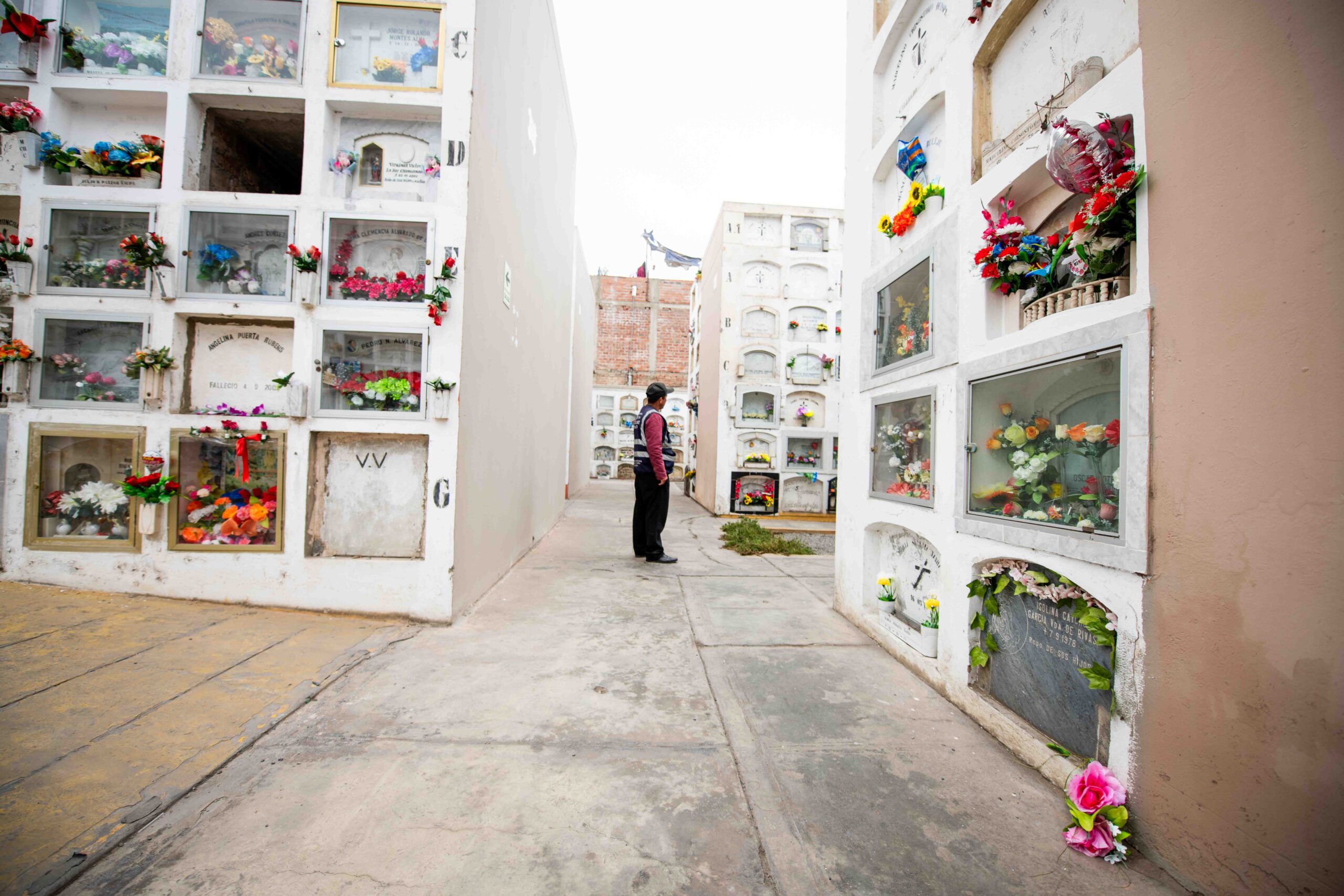
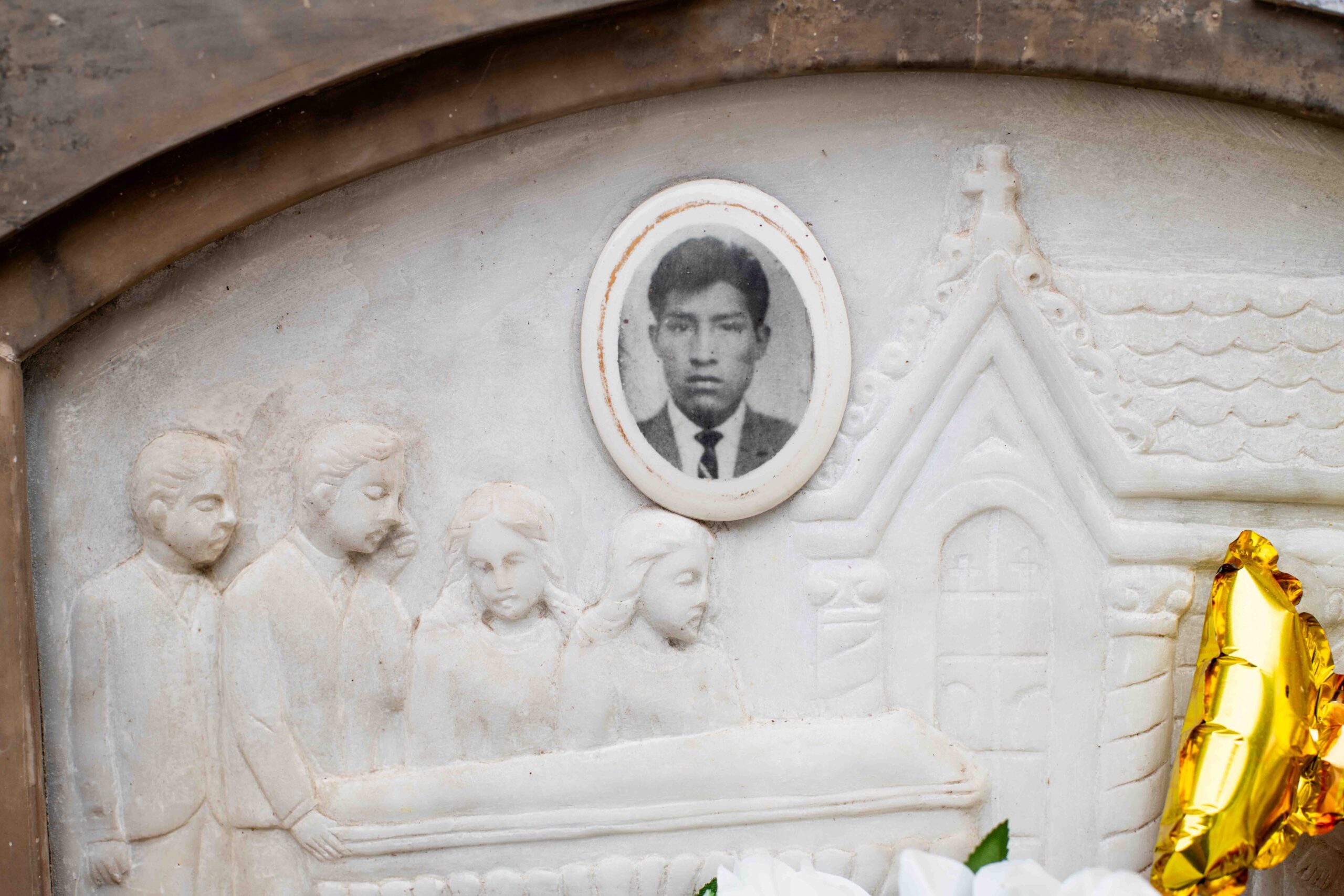
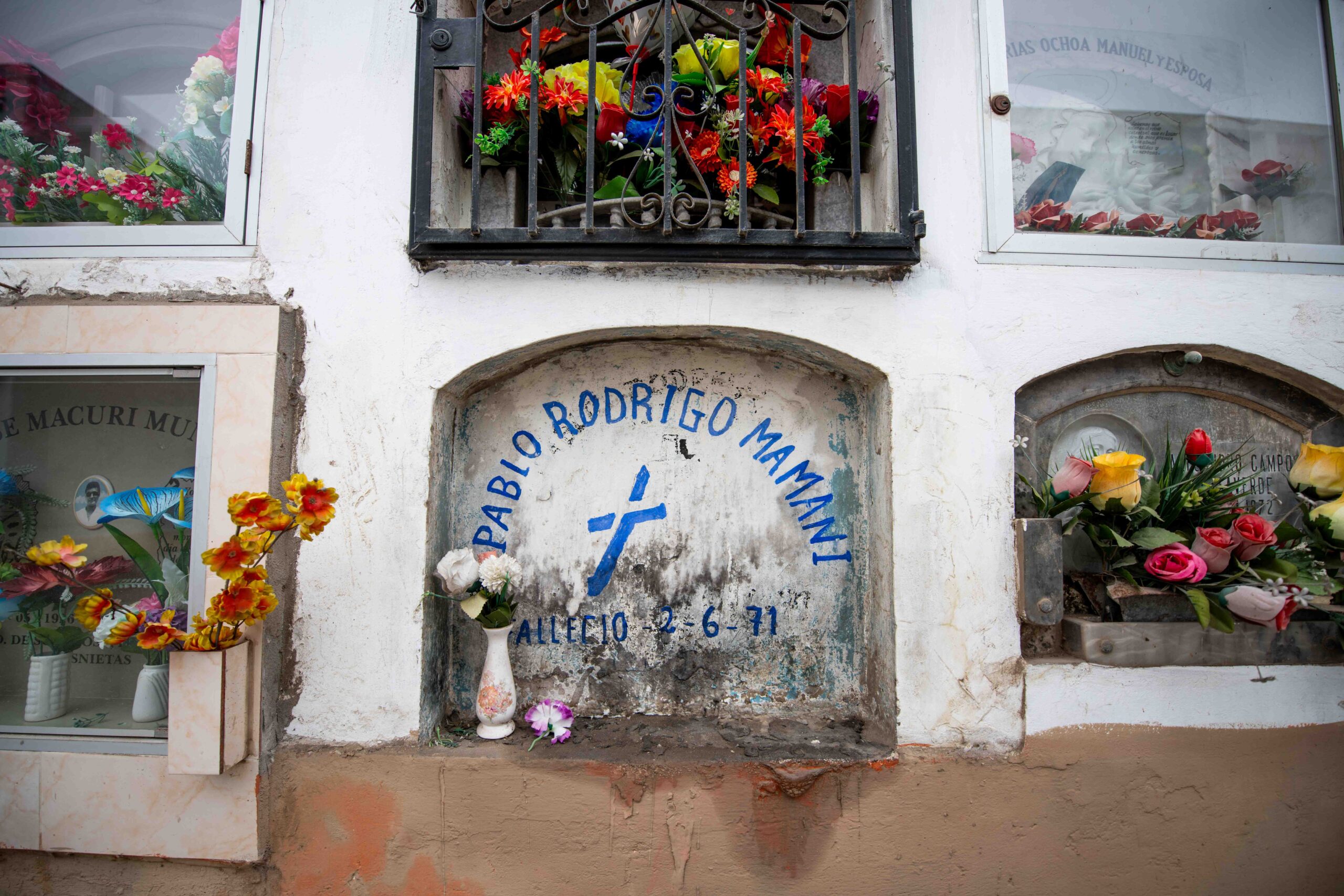
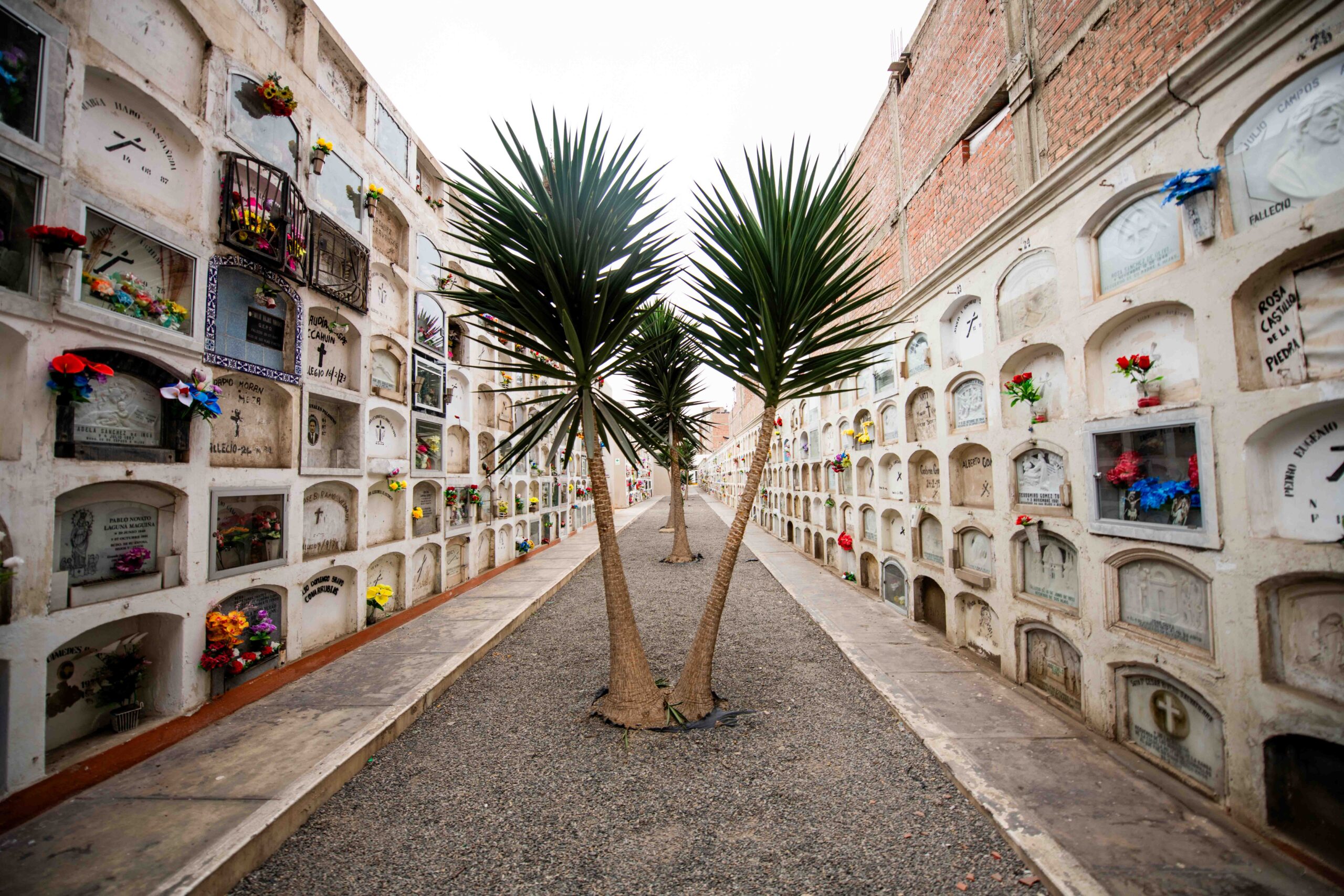
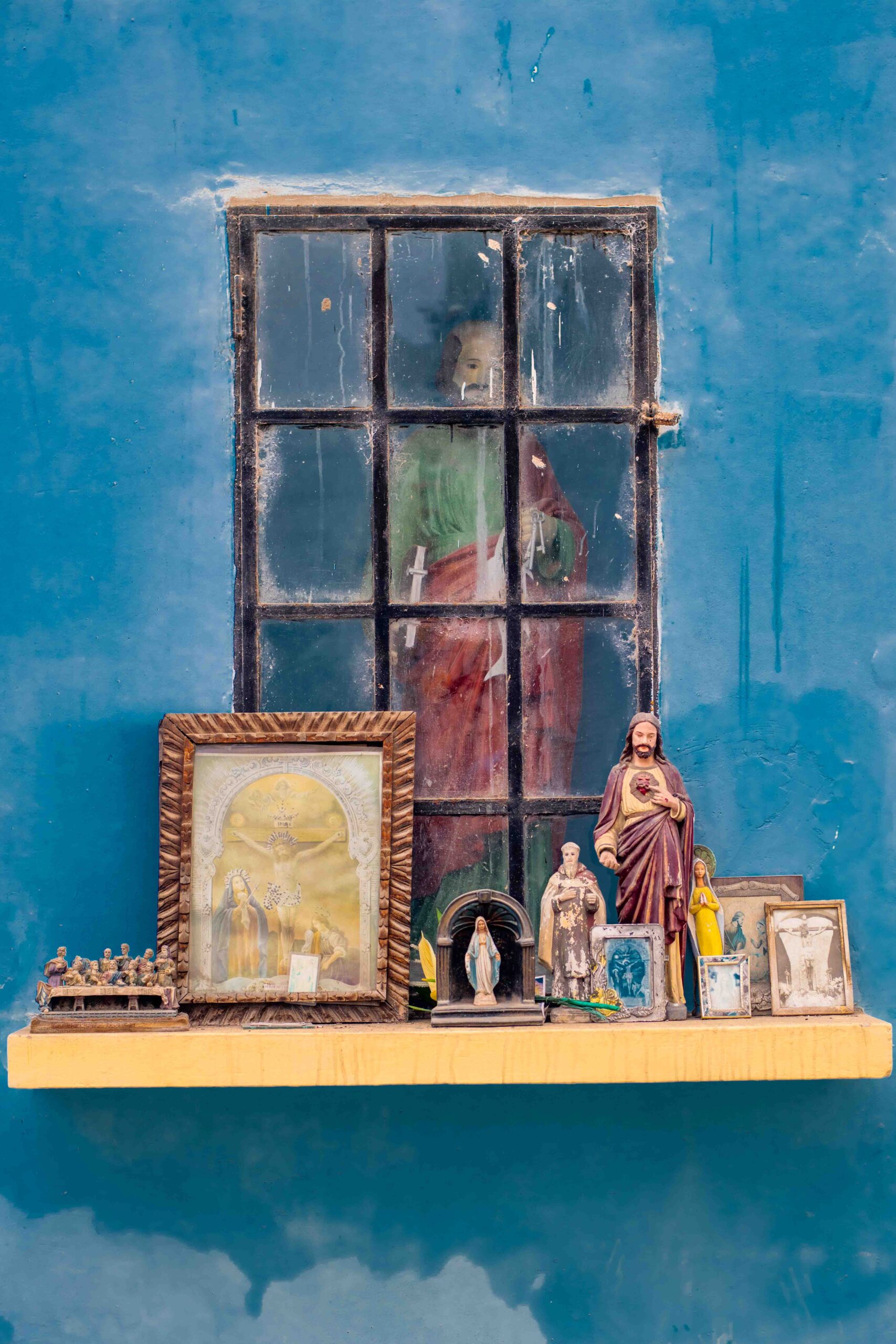
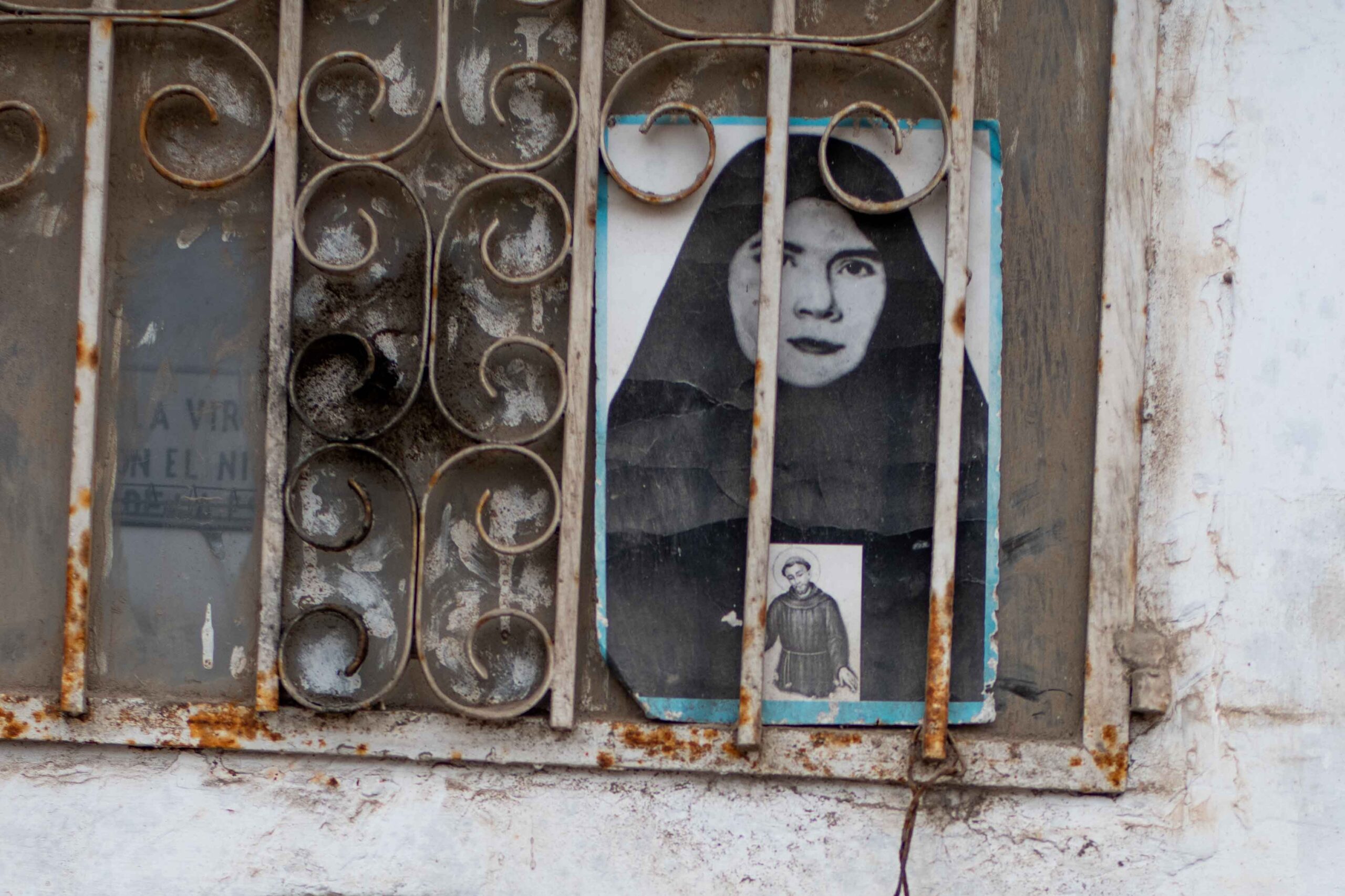
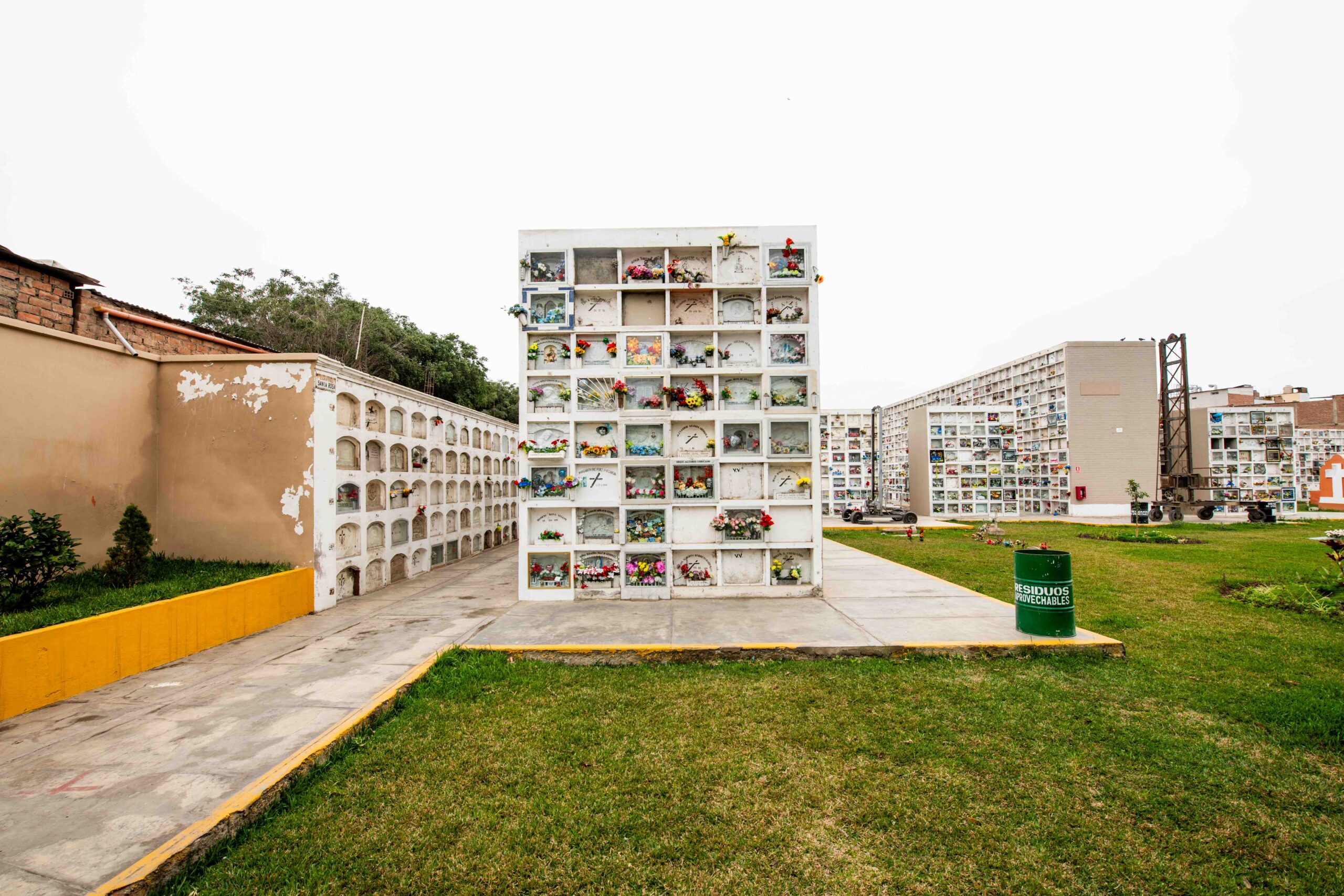
San Pedro was small, in such a big city. It did not dedicate large plots to the famous and the rich, rather it was like a great library. Long and tall walls, two coffins wide, sixteen feet high, concrete mausoleums. Slots one on top of another, five high in one section, thirteen in another. Each filled space was sealed with concrete and glass. Sometimes the marker was a name scrawled in wet cement. Most of the time there were raised letters, plastic flowers, dates and earnest dedications. Statuary, toys, coins and stones. Colorful.
This cemetery affected me like they all do. They bring my thoughts toward quiet contemplation. They bring me to my people who have gone from this place. So there I was in the aisles of a large mausoleum in Lima, when the man approached.
I hadn’t taken my camera out, so at least I didn’t need to explain that. But he did ask me, I gathered, what I was doing there. He looked at me quizzically. American tourists who just love cemeteries were not a part of his experience.
I smiled, I breathed. Instinctively I made my posture non-threatening. I said I was a tourist from the USA, and that I had come to see Lima with a church group, and I enjoyed Lima, which was very beautiful. I told him I liked to visit the cemetery. I spoke Spanglish, maybe. Phrases created from two and three words. The man appeared perplexed. Was I a concern? A criminal? Why would a tourist come here?
I could explain a little more. If tourism didn’t compute, what about my mother? I told him my mother had died recently. Being in the cemetery was like being in a church. Here I was in a place that reminded me of her. Here I could pray for my mother.
He only looked more puzzled. He took out his phone and called someone. For a few moments I waited as he explained to another person, somewhere, that there was an American, who might be lost, in his cemetery. When he hung up, he asked me more about my mom. “?Cómo se escribe el nombre de tu madre?” I pulled the map from my pocket, and scrawled her name over the blank blue Pacific Ocean. “When was she born?” “When did she die?” he asked. I wrote the dates of her birth and death over the ocean waves. He nodded. Now he understood. He put his phone in his pocket, and motioned to me to follow him. Then I realized what understanding our skeletal communication had brought us to. He lead me about the cemetery, and we read the names and dates on the front stones, looking for none other than my own mother.
I could have told him, if I could have, or maybe I tried, I don’t even know. My mom is in a jar. She’s okay, I’m okay. I miss her. The jar is on a shelf in Minnesota. But that didn’t translate at all. So I let him lead me. We walked up and down these rows. We read the names and checked the dates. She was not there, though I felt her all around me. The security man from San Pedro Cemetery was helping me look for my mom.
His phone rang in his pocket, and I could pick through his words and discern that it was a call-back. It was about me, and shortly another man appeared, and looked concerned, and asked me what was happening here. I lead off with my standard “no habla Espanol” apology, and he responded in basic English. This was the person my helper had called, I was fairly certain. Perhaps he was from the high school a mile away. Or something. Now I could explain more clearly what I was doing, and someone would understand me.
Tourist American.
Love Lima, and Peru, and cemeteries.
Cemetery makes me think of dear ol’ Mom, who died recently. But she’s not here! She’s there.
I’m okay, really. I just like cemeteries.
He nodded. He explained to helper #1. Then #1 nodded in understanding. And from there, #1 lead me on another tour of the graveyard, this time, instead of looking for my mom, we admired the beauty of it all. He put his hand on a statue of the Blessed Virgin Mary. With his pointer finger he underlined the single date on the grave of a newborn. We talked in a simple way about our mothers and our fathers, that they were all four gone now, and how we missed them and loved them.
Now we were hermanos, brothers, still looking, for fathers and mothers, worlds apart in our experiences, but two of a kind in this. Looking, missing, praying, remembering. And Mom! All around me! Laughing, enjoying, encouraging. She knew that I sought her, and I knew that she was there as much as she was anywhere. We knew that we’d found each other.
~~~~~~~~~~~~~~~~~~~~~~~~~~~~~~~~~~~~~~~~~~~~~~~~~~~~~~
There was a time, a long time ago, Mom and I went for an after-lunch stroll in Lakewood Cemetery, in Minneapolis. We wandered into the “library section,” those slots of graves on shelves. She looked up at a stone and was amazed to see her cousin’s final place of rest. Lakewood had some 200,000 graves, so unexpectedly finding your relative isn’t something a person does easily or frequently. Later on that walk, I don’t know what got into us. You know how all that sad energy can make you feel. We were just walking over the hill, and we started singing “Danny Boy.” The corniest, schmaltziest song of all songs, that rings so truly of real grief, if you will only let your guard down, and stop worrying about what others will think of you. With no one there to overhear us but the slumbering masses, we sang it hard and strong, mother and son in the cemetery, a tear in each eye. After the last note we found our self-awareness again, and had a laugh at ourselves that will last forever. Mom and I have always enjoyed our walks together in cemeteries.
~~~~~~~~~~~~~~~~~~~~~~~~~~~~~~~~~~~~~~~~~~~~~~~~~~~~~~
Did you make it all the way to the end? I owe you a beer.