
More photos of our dear pets, because I need a diversion from the things I'm thinking about most of the time. Maybe you do too.
First published in The Study of Light, on Substack, on September 23, 2025
Who am I kidding? Dogs don’t just feel, and cats don’t just know. The best companion animals do a lot of both for us. Perhaps it’s convenient for me to simplify them thus, but reality is far more complex and wonderful.
Back in the nineties(!), in my young adulthood, I moved into an abandoned farmhouse with a couple of other guys. It was Woodbury, Minnesota’s last gasp as farm country, before the bulldozers knocked the barns down, and scraped the hills flat for McMansion development. Jeff, Dan, and I rehabbed a house just enough to make it rain-proof, wind-proof, and livable. We repaired the diesel furnace and added a wood stove, and made a glorious go of bachelorhood for the next four years.
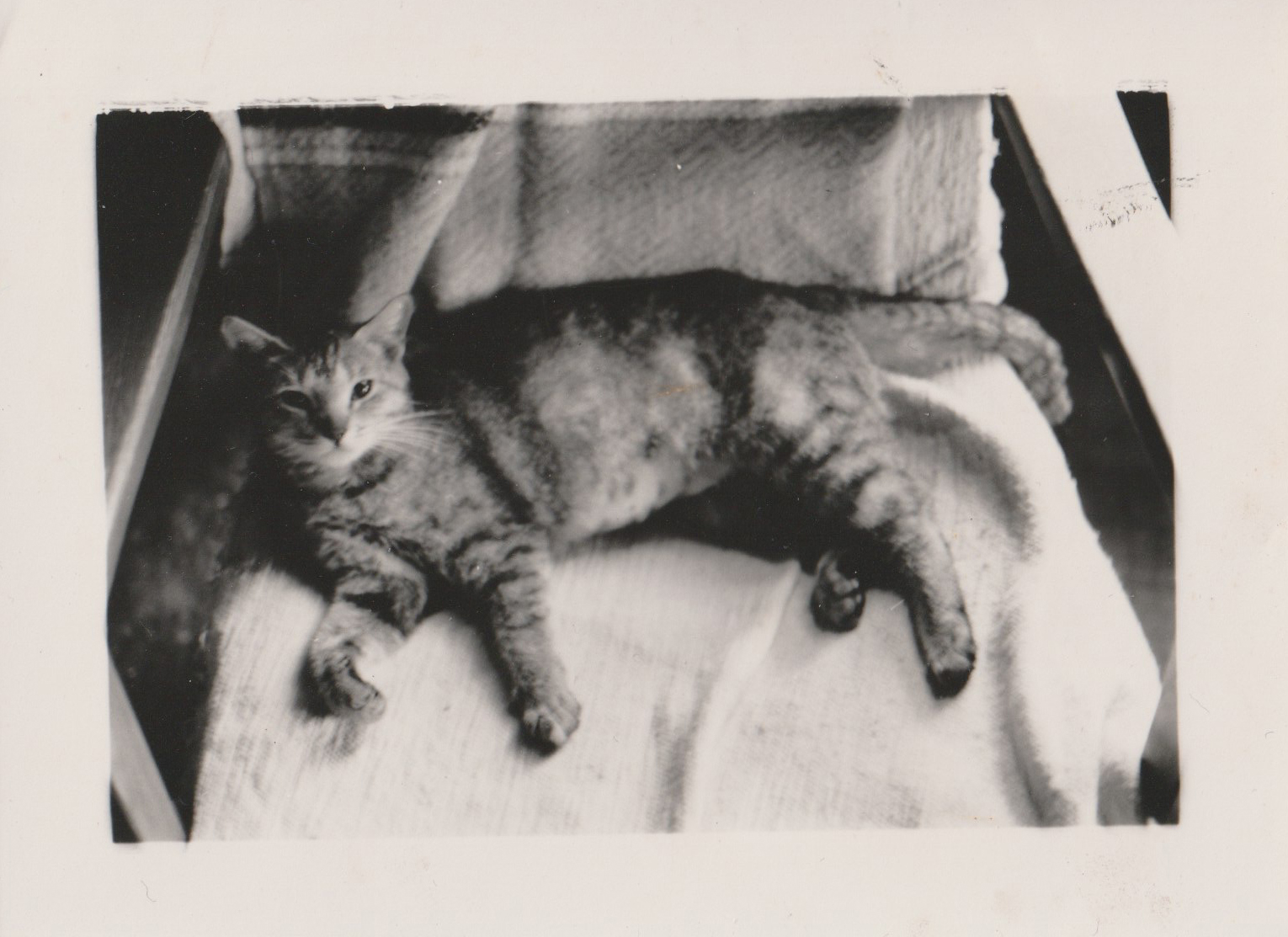
Bono, the Buddha cat from the old farm.
One year in, we discovered a cat in our kitchen, raiding our garbage. It had entered through a crack in the fieldstone foundation and found its way up from the basement. Jeff wasted no time creating a plan to solve the problem. He simply stood a rifle in the corner of the dining room. The next one to see the cat could just “dispatch” it. I don’t know why I thought this was an acceptable solution. I suppose kitchen messes were bad, somehow worse when a cat left them than when we did. And shooting it? Was that just what you did when you lived on a farm? You might wonder, what about the damage to the house? We all agreed to be careful not to hit any pipes, wires, or appliances or roommates. The owners of the house were developers of a future suburban community. They didn’t care what we did, as long as we kept the vandals at bay.
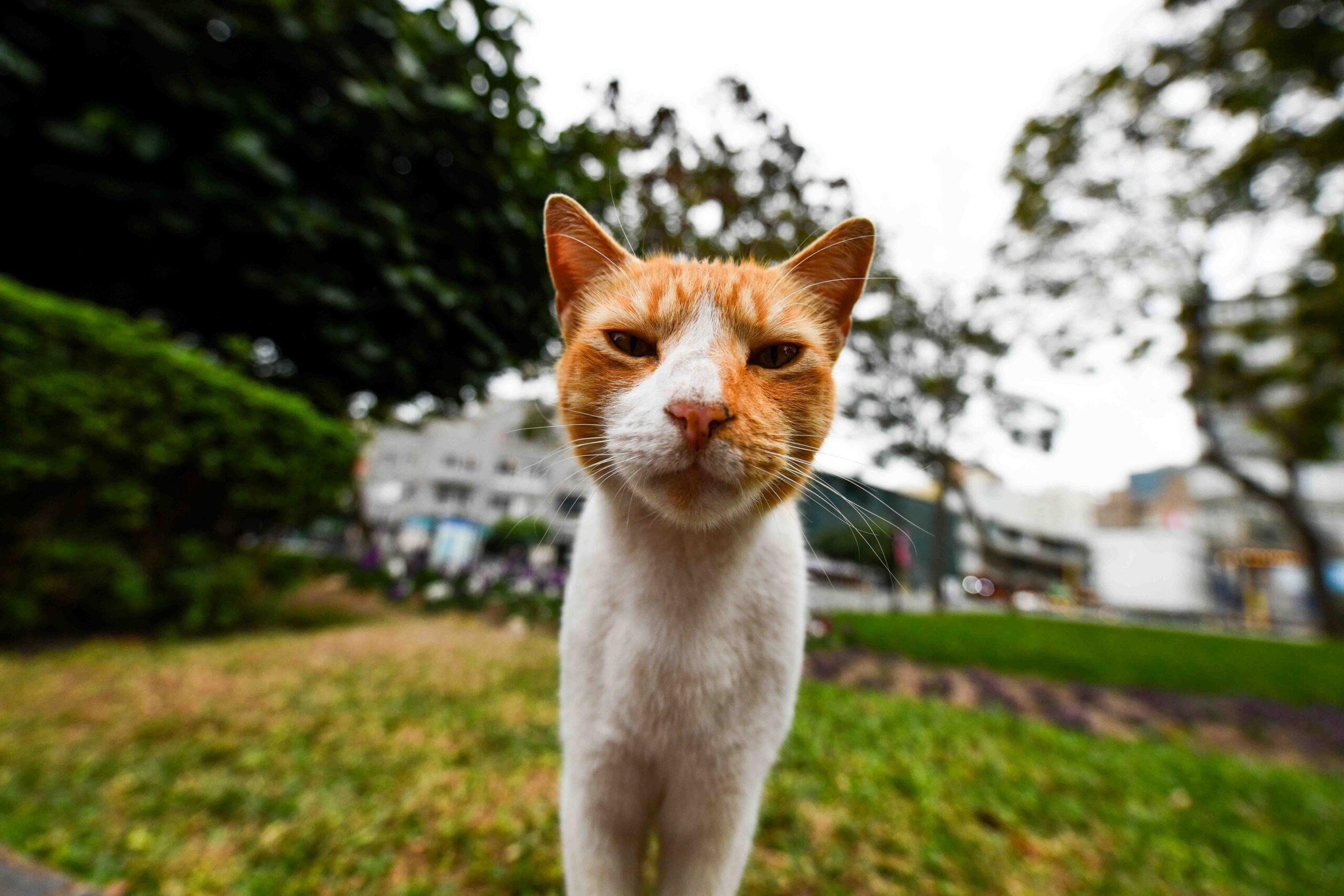
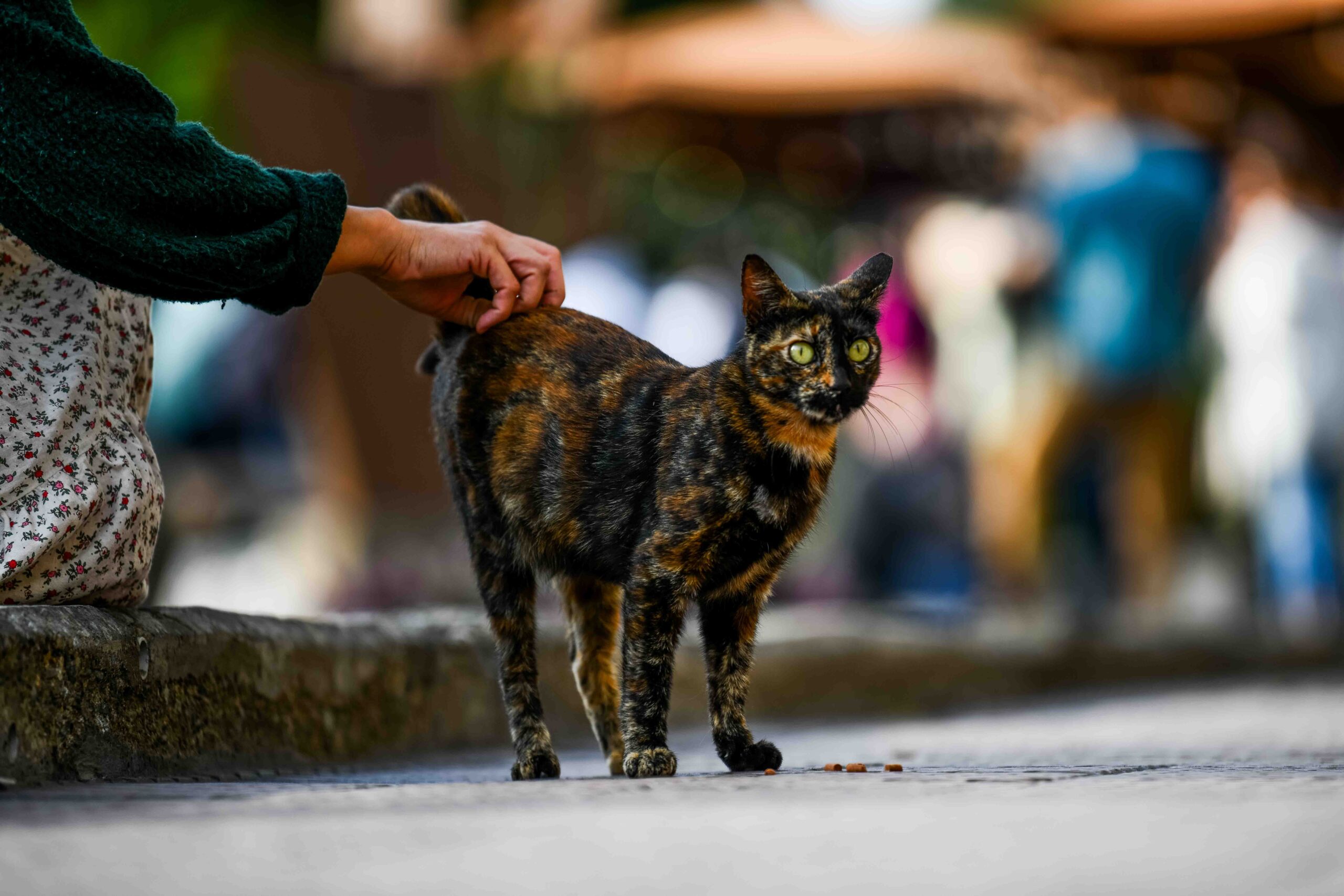
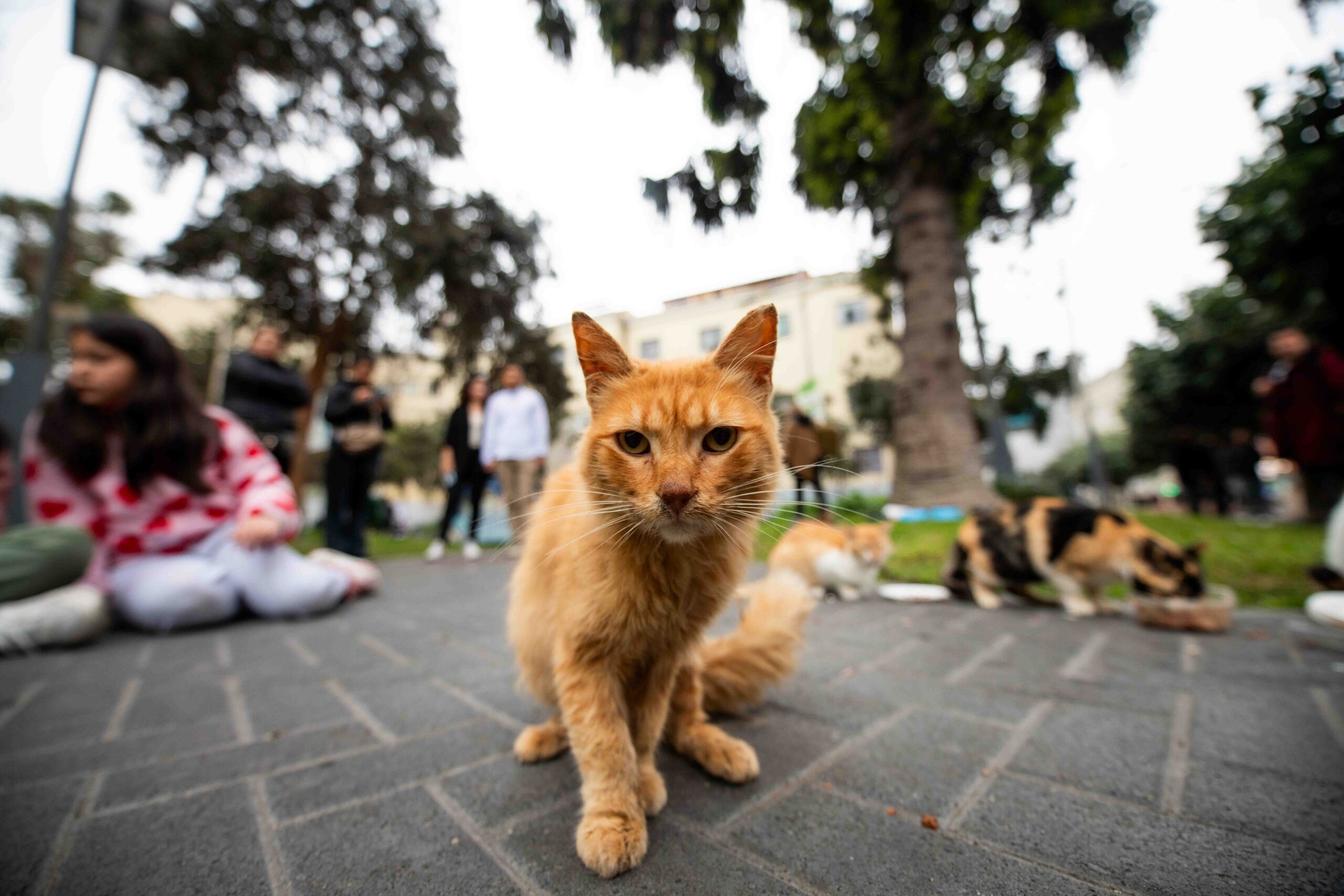
City cats in Lima.
Plans for the cat changed when I followed her to the storm cellar stairway. Beneath the decaying doors I found her nest. She was not pregnant, after all, but nursing. She’d already had a litter, and the food she took from the kitchen was for making milk. Under these circumstances I wanted only to find homes for the kittens, and help the cat through the transition. She became our pet, and my companion.
I tried to explain this to my practical brother out in Los Angeles. At the same time I told him about the pet cemetery I had photographed in St. Paul. He thought it was all weird, until he met his own cat, Rascal, who he adored for the next twelve years. He loved that cat so much, he took a lot of Benadryl and went through dozens of inhalers, because having this companion was more important than optimal health.
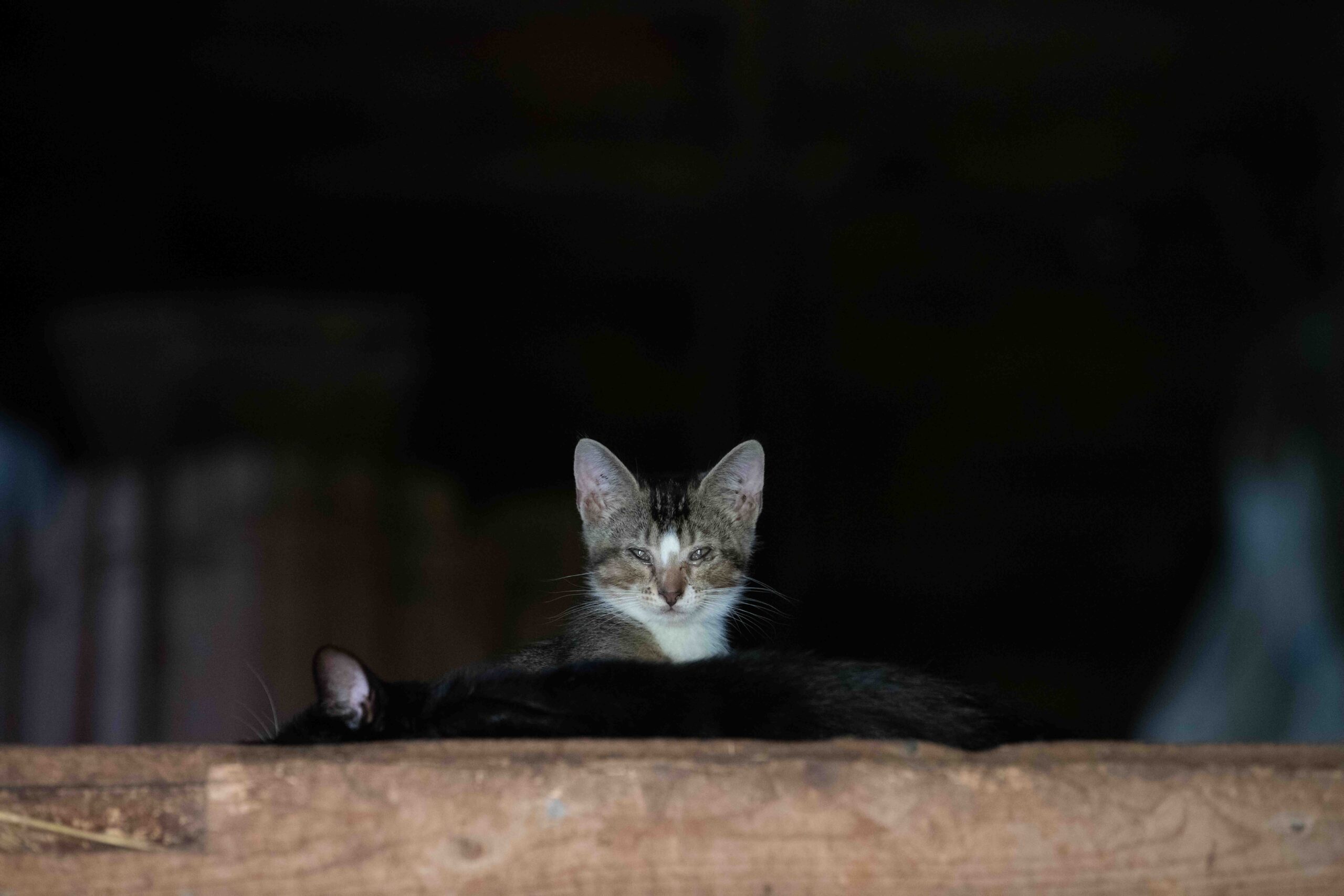
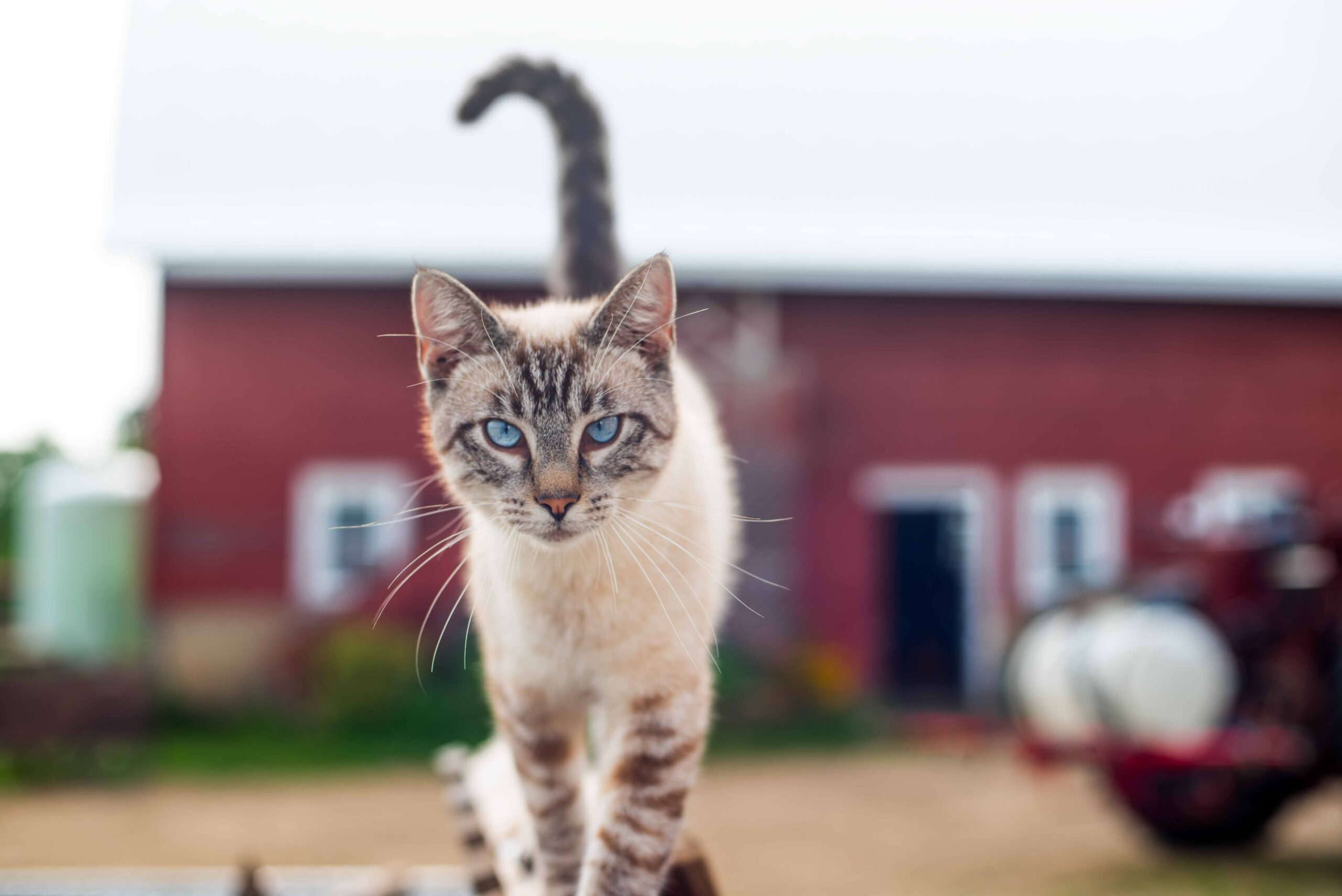
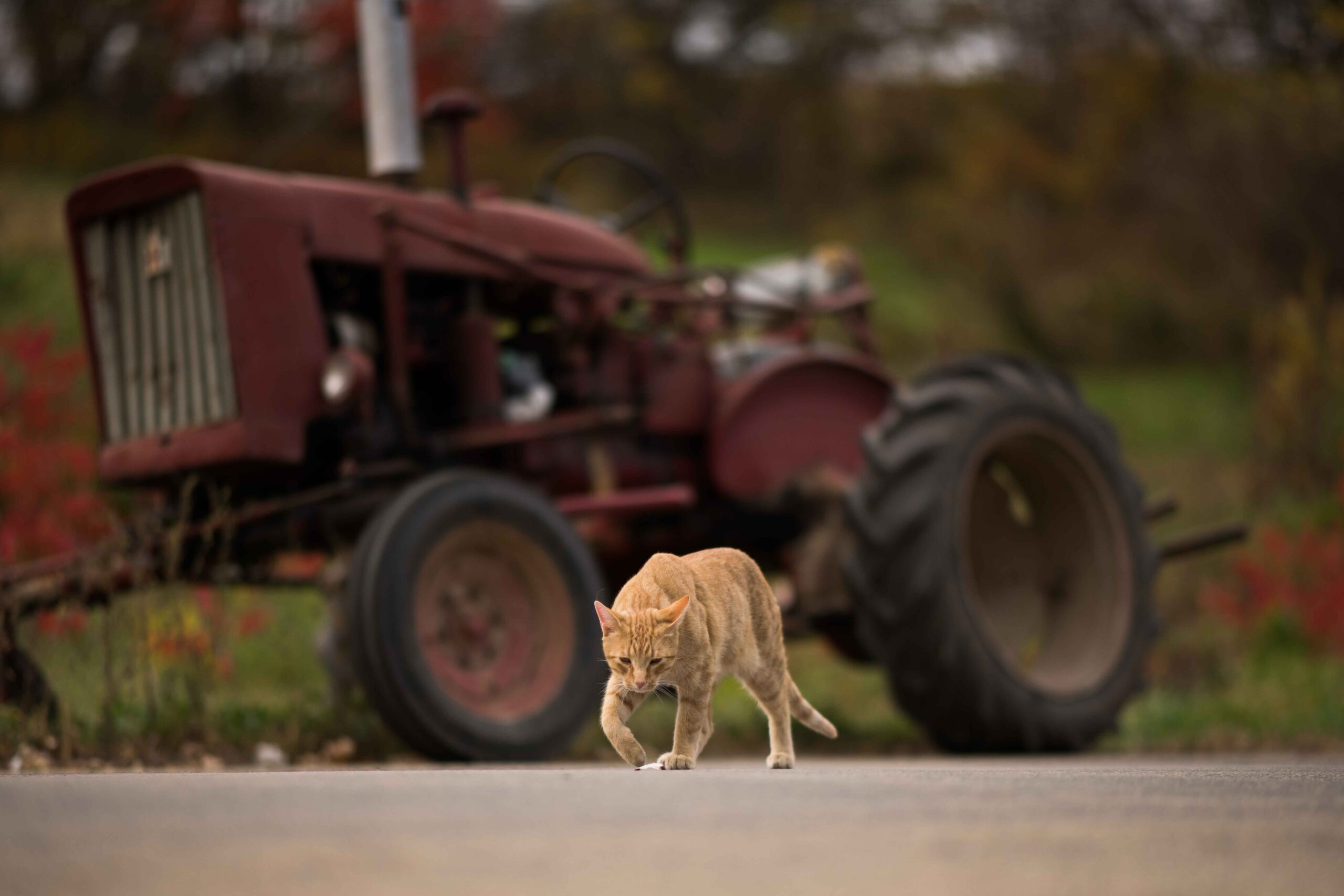
Wisconsin is a fine place to be a farm cat.
To appreciate how a pet can love you and change your life, and how a pet owner (one of the ones from the St. Paul cemetery) could be so stricken with grief that they would drop a thousand dollars for a grave and a stone that read “Duchess, my only friend,” you just need to meet the right cat/dog, and love it. See what happens.
Bono, as our cat was known, was a Buddha cat. When I had a dilemma, she gave me the solution. To go the party, or not to go, one night, that was one question. I was going to go, but only out of obligation. As I reached for the car key, she jumped up onto the table and laid across my arm. Aided always by my bounteous imagination and willful perception, this cat gave me good advice on women, rid our house of rodents, and entertained us with catch, release, and catch again athletics. She could play with a vole for an hour before finally euthanizing it down her throat. Whenever one of us returned home forlorn from a bad date or all broken-up with, she was our first line of comfort. A good cat is like that.
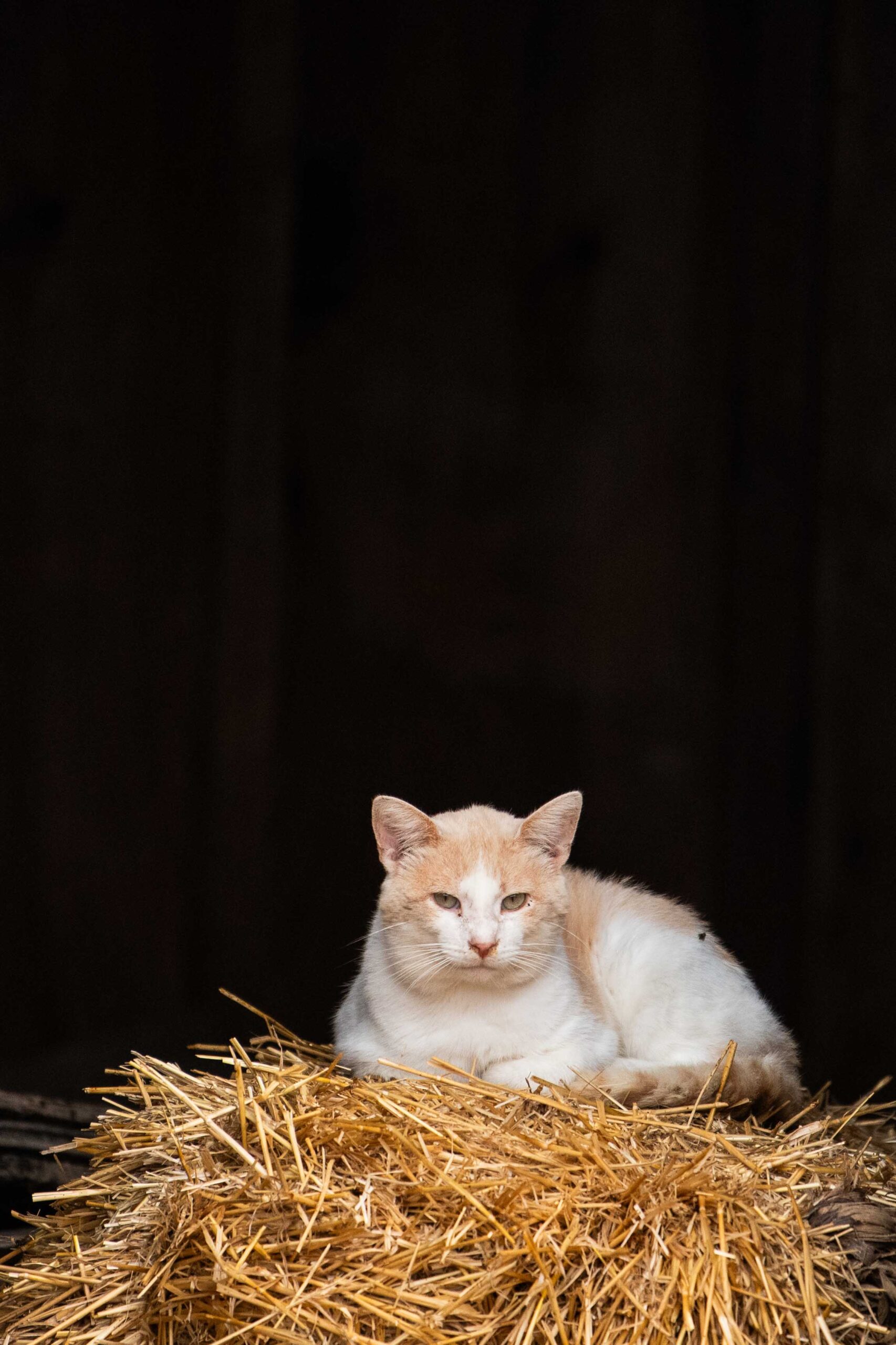
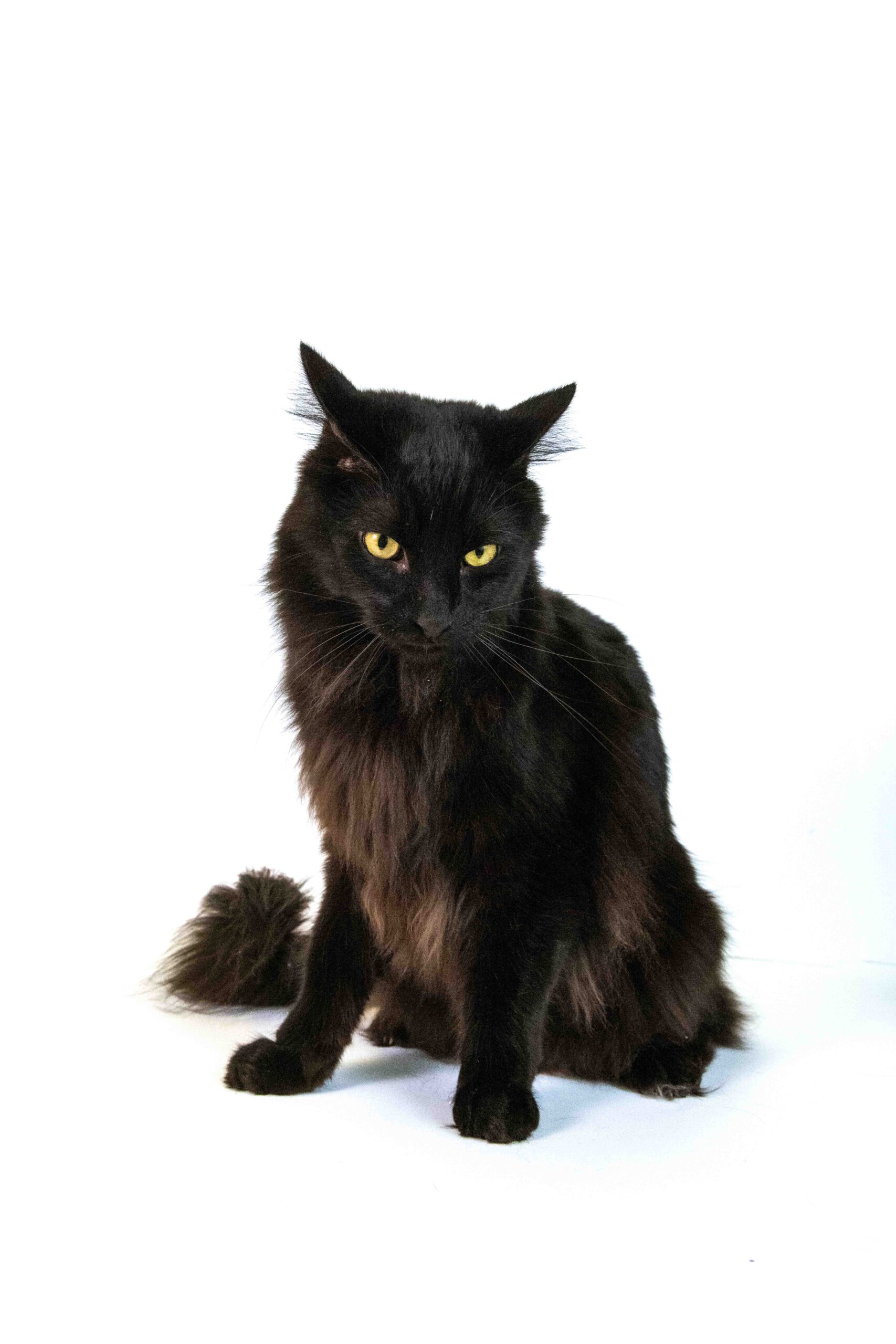
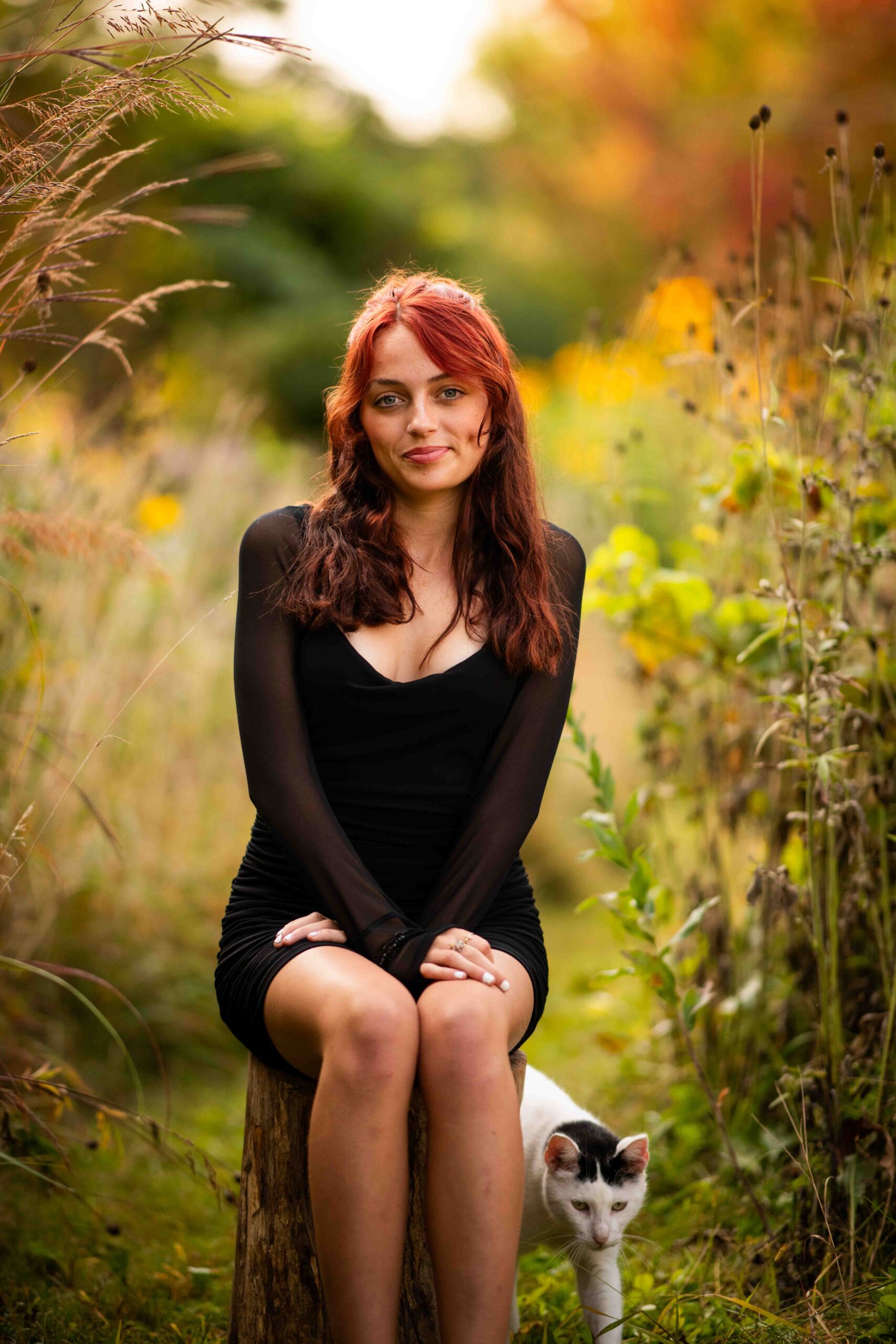
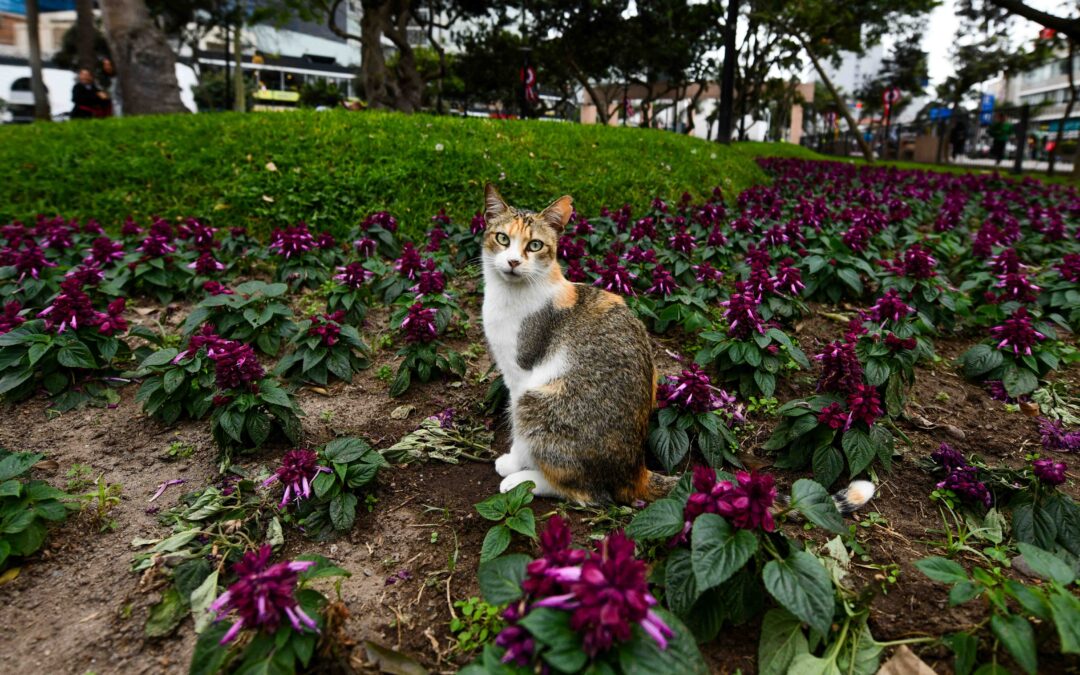
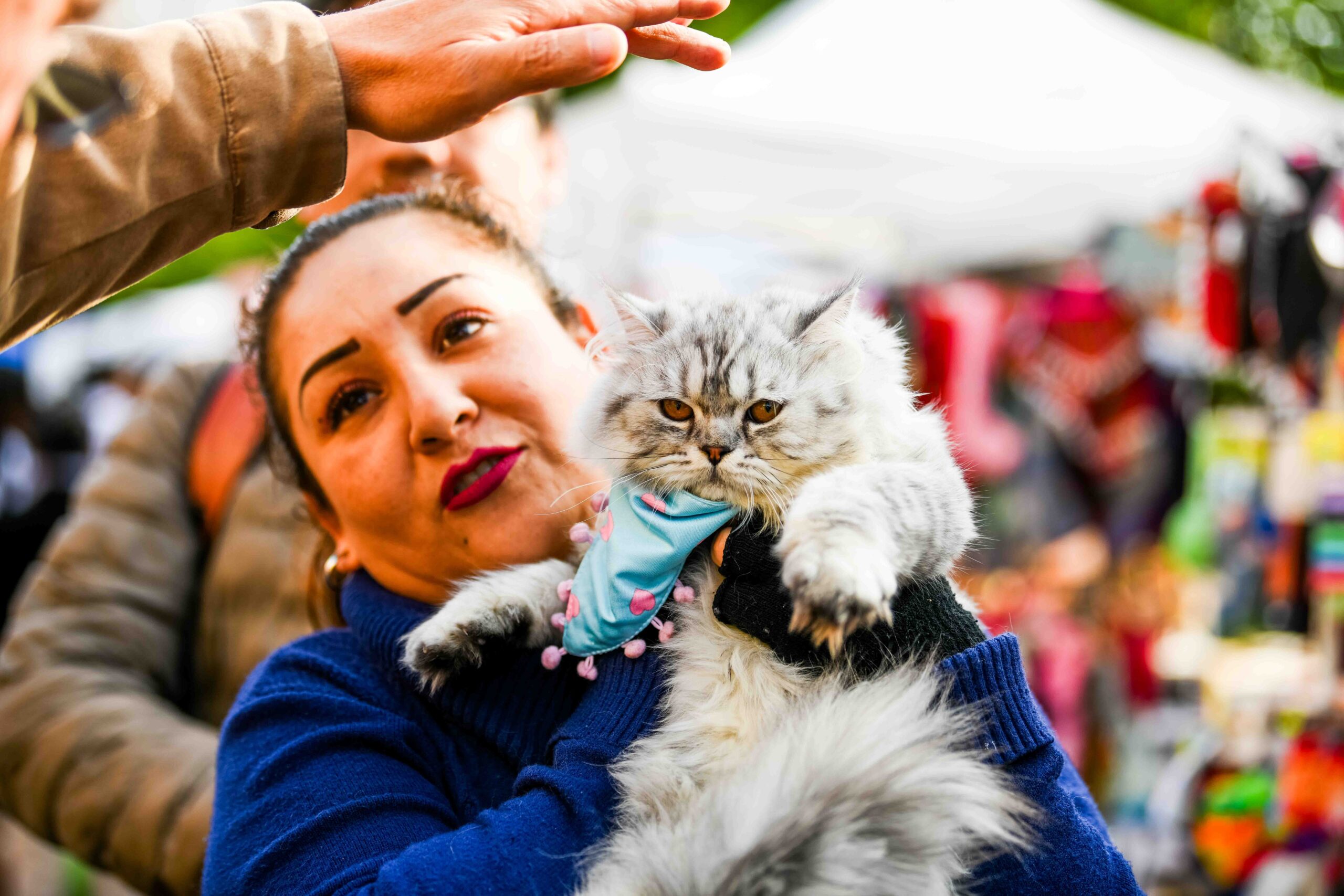
Many of these cat photos come from Kennedy Park, an urban haven for humans and stray cats alike, in Lima, Peru. Others come from farms and the humane society. And there’s an old one of Bono, the Buddha cat, who showed me what a cat can be.
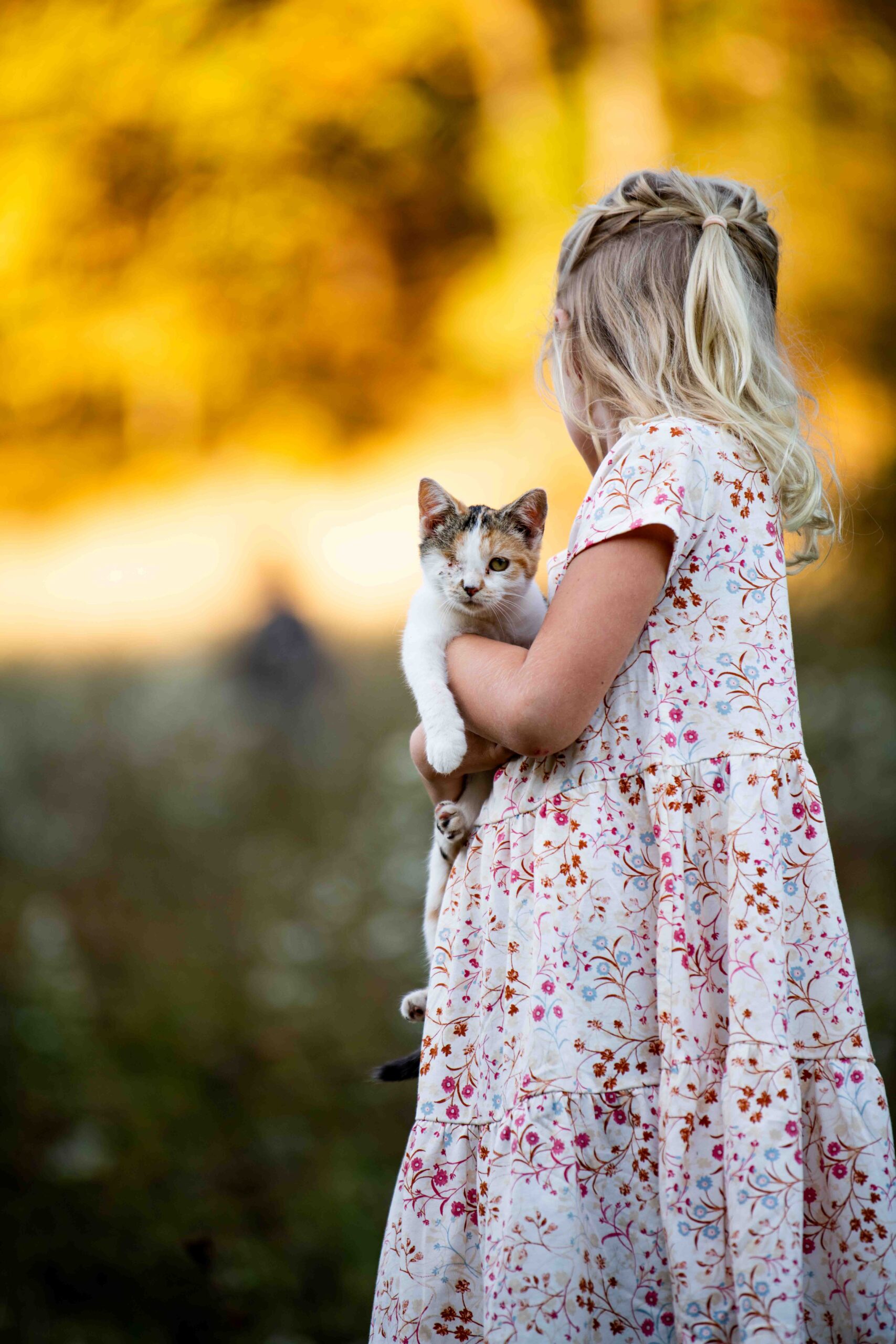
This cat was featured on the recently released CD Barn Cat Funeral, by Lone Goat Rodeo/Tim Eddy.