
What You Don’t Know About How College Students Spend Their Time, Money, and Love
First published in The Study of Light, on Substack, on May 19, 2026
For example, a college sophomore travels with friends to a beach resort in Mexico, and has a raucous good time, but maybe not really. Too much tequila, too blurry boundaries. Student returns home with photos and a hangover, stories and a nagging feeling of dissatisfaction.
That’s easy to imagine, and so is this:
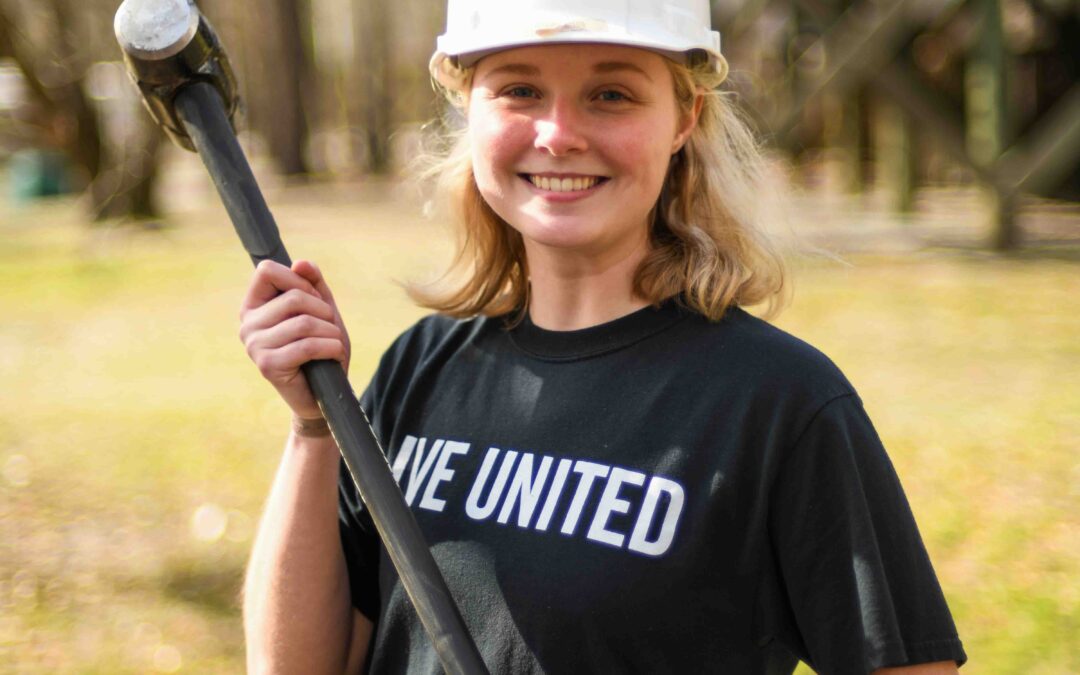
That same student decides, one year later, to opt out of the party scene, and instead chooses something that feels good the whole time, and that has a lasting positive effect. The student might stop by the Student Affairs office on campus, and ask the staff there about the poster they saw outside the dining hall. That poster with the photos of last year’s volunteers, covered in mud, wielding pickaxes, grinning proudly.
“YES!” says the program officer. “We have two trips this March. We have a group going to Kentucky, to do tornado cleanup, and another to Puerto Rico, to clean up after Hurricane Maria, and cut trail in the rainforest there.”
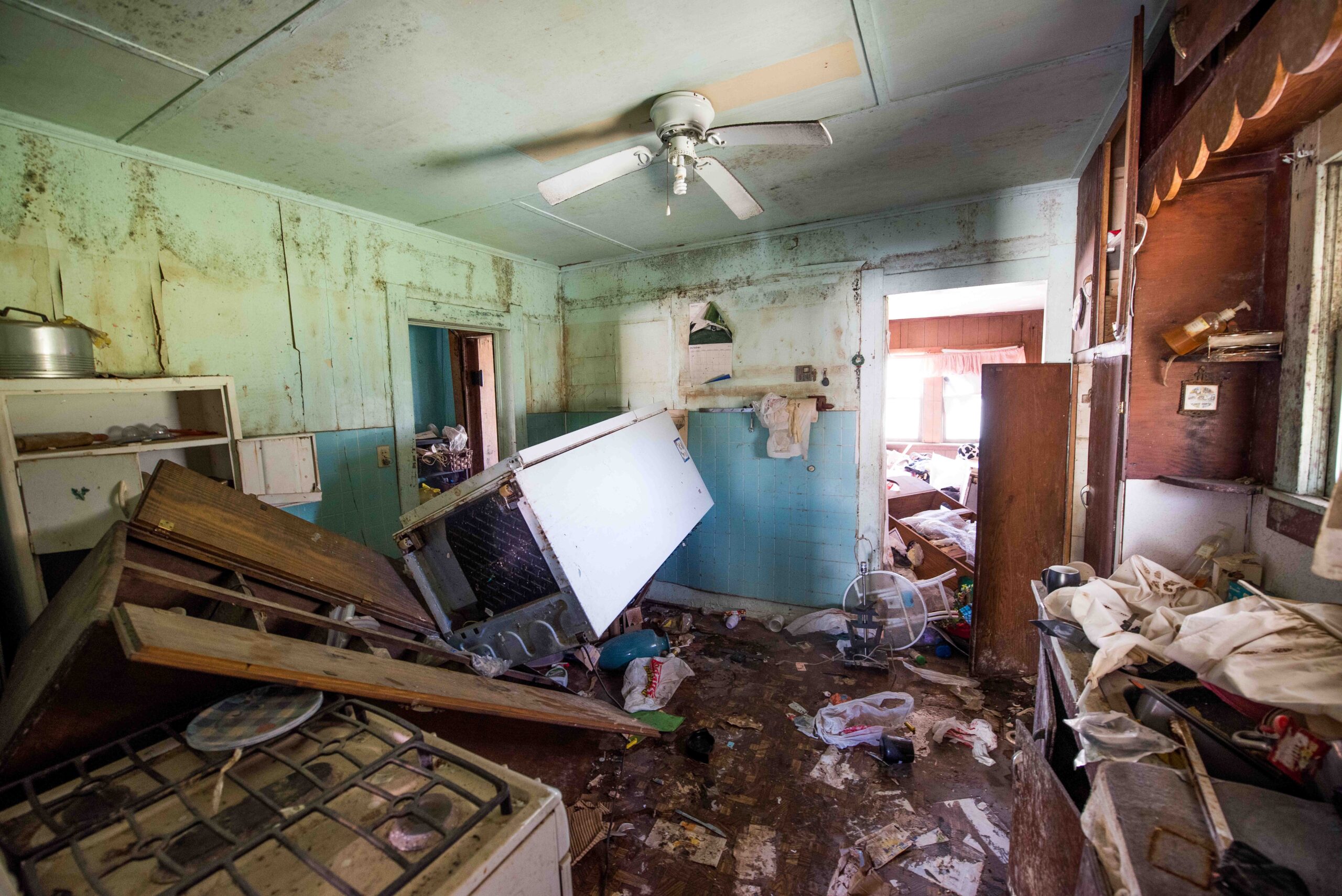
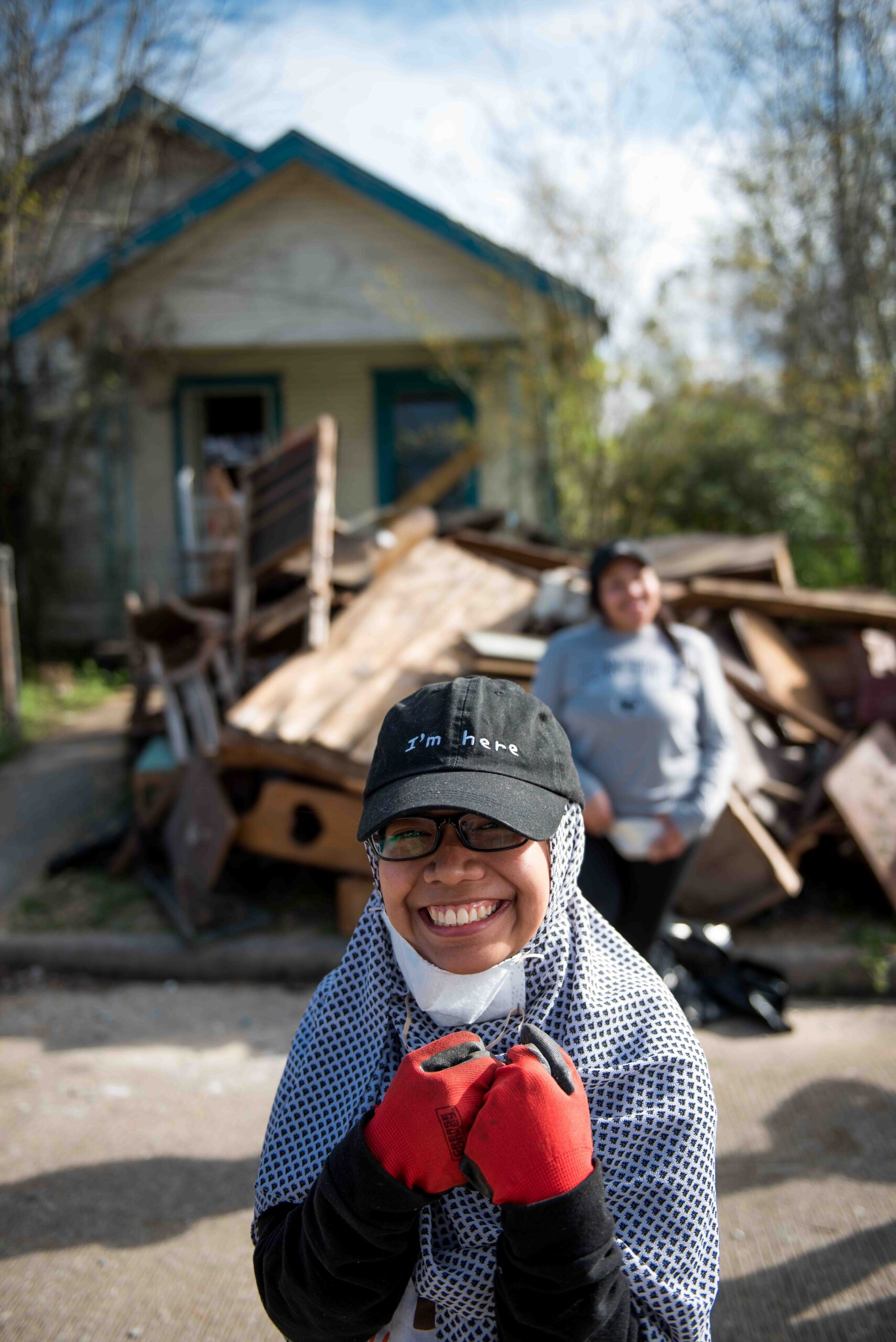
Before and after house cleanup in Beaumont, Texas, following Hurricane Harvey. Flooding in this area reached the ceilings in most houses, and these neighborhoods went on for miles. When a crew finds a refrigerator, they wrap it in duct tape and remove it as a group. To open it is to risk almost certain nausea. In the second photo, the hat says it all. "I'm here." She was there. She worked so hard, and felt so proud.
Thus begins the adventure of a college career, named somewhat inaccurately the “Alternative Spring Break.” The name doesn’t fit well because while the trip is reliably alternative, it doesn’t always happen in spring. Most of them are college groups, though some of them are high schoolers or businesses. The trip is always a service trip, though that is a term that is usually reserved for religious, or nonsectarian service organizations, e.g. the Lions Club, or the youth group from St. Edward’s. So “ASB” can be shorthand for more than that. But here’s what if often means:
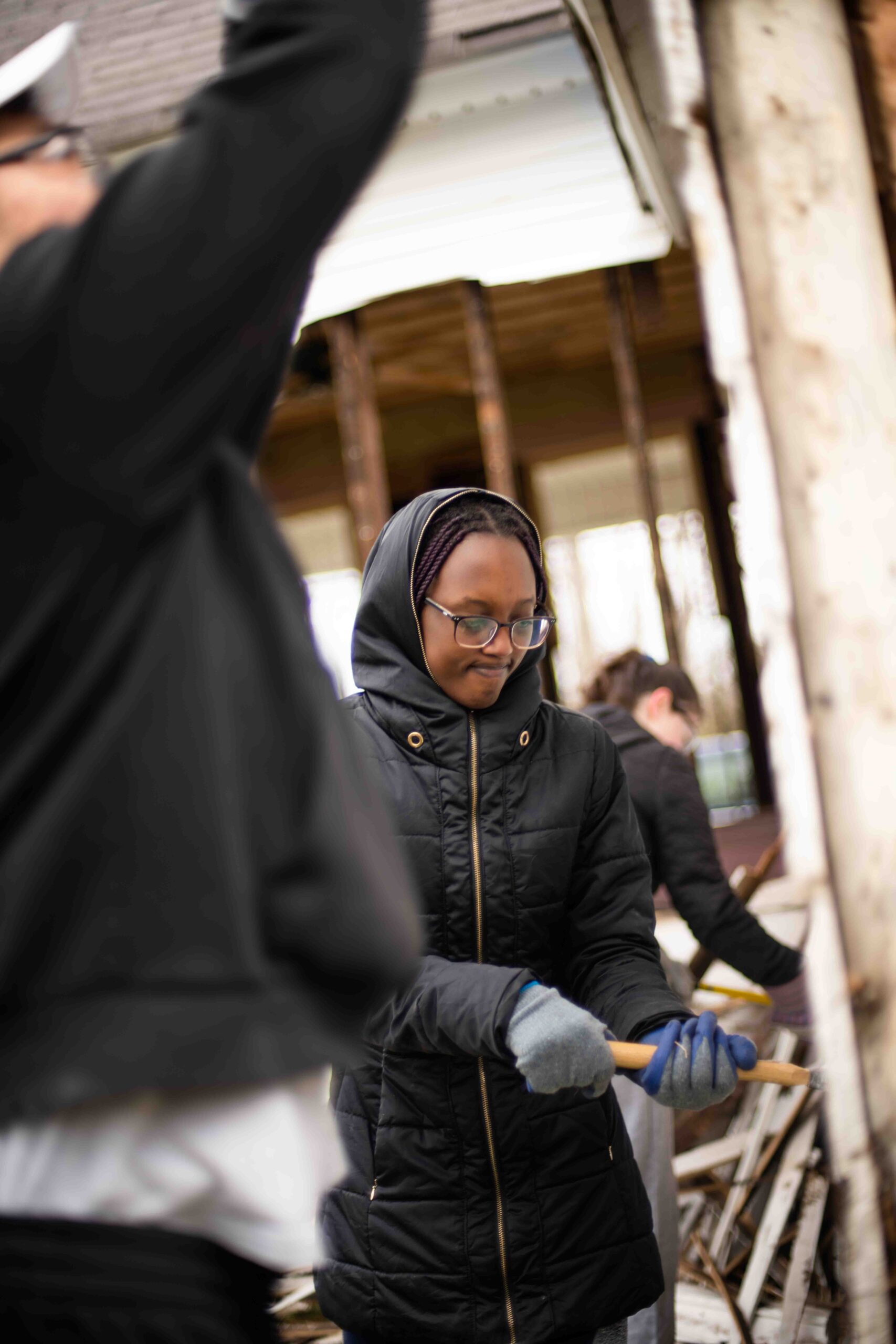
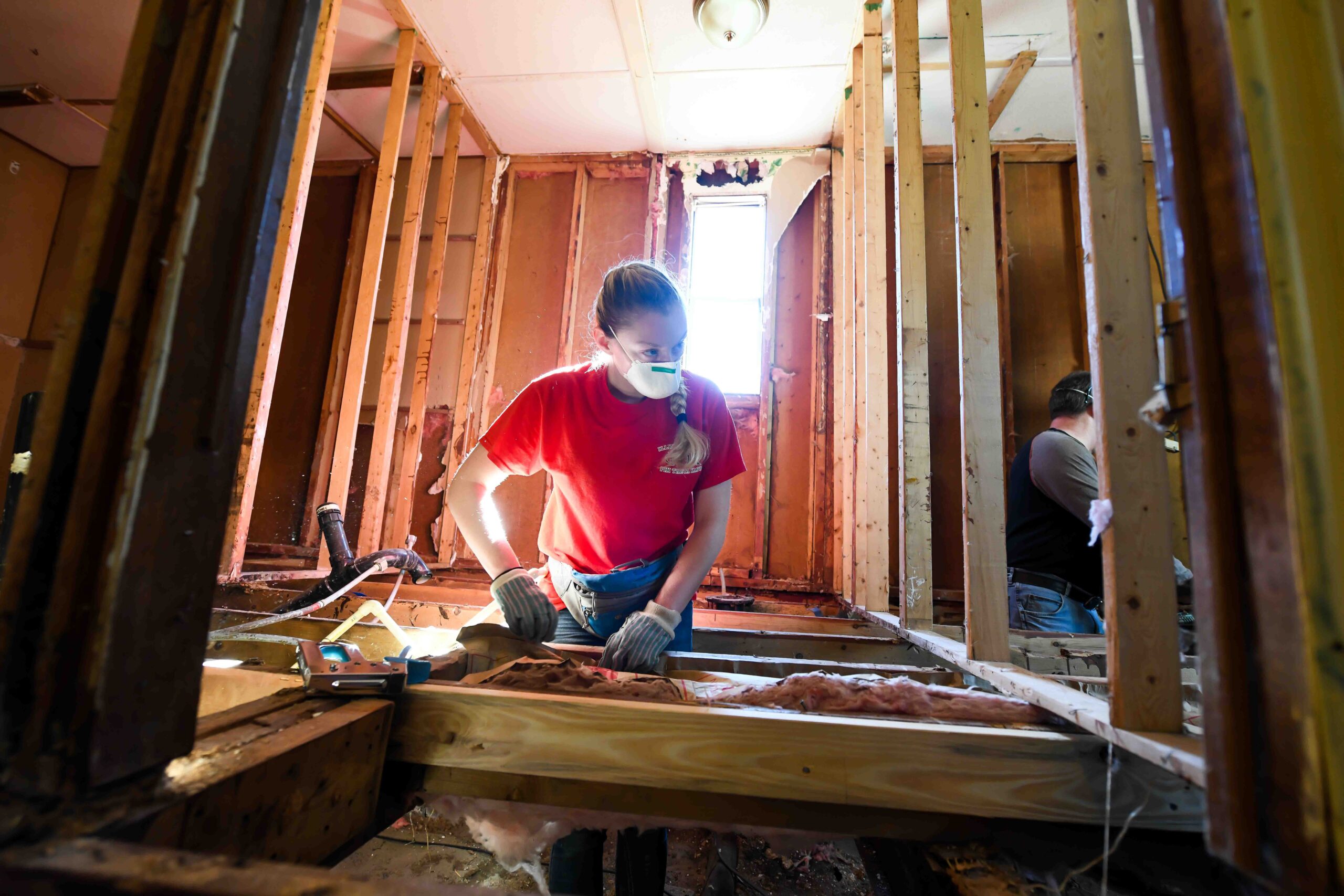
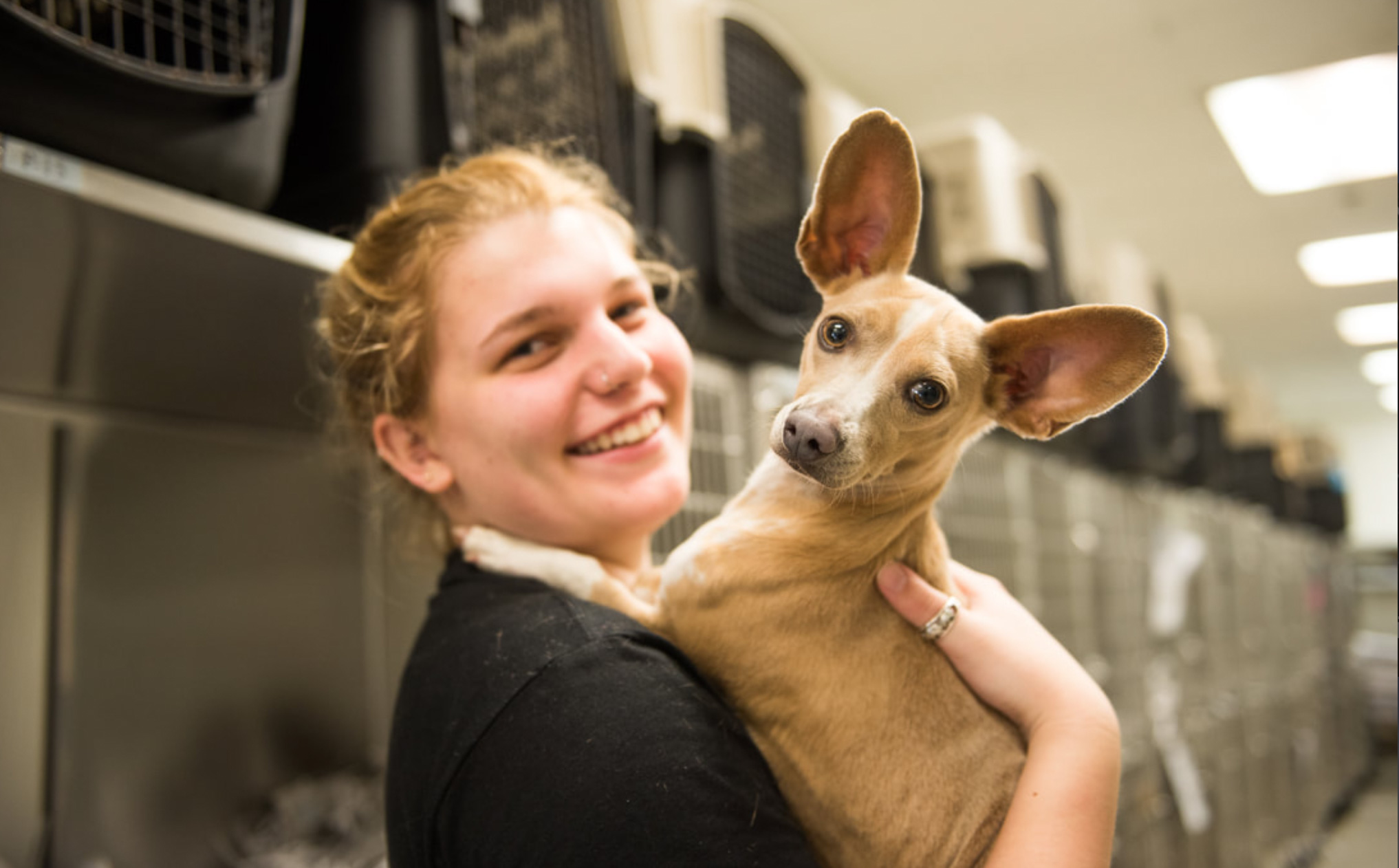
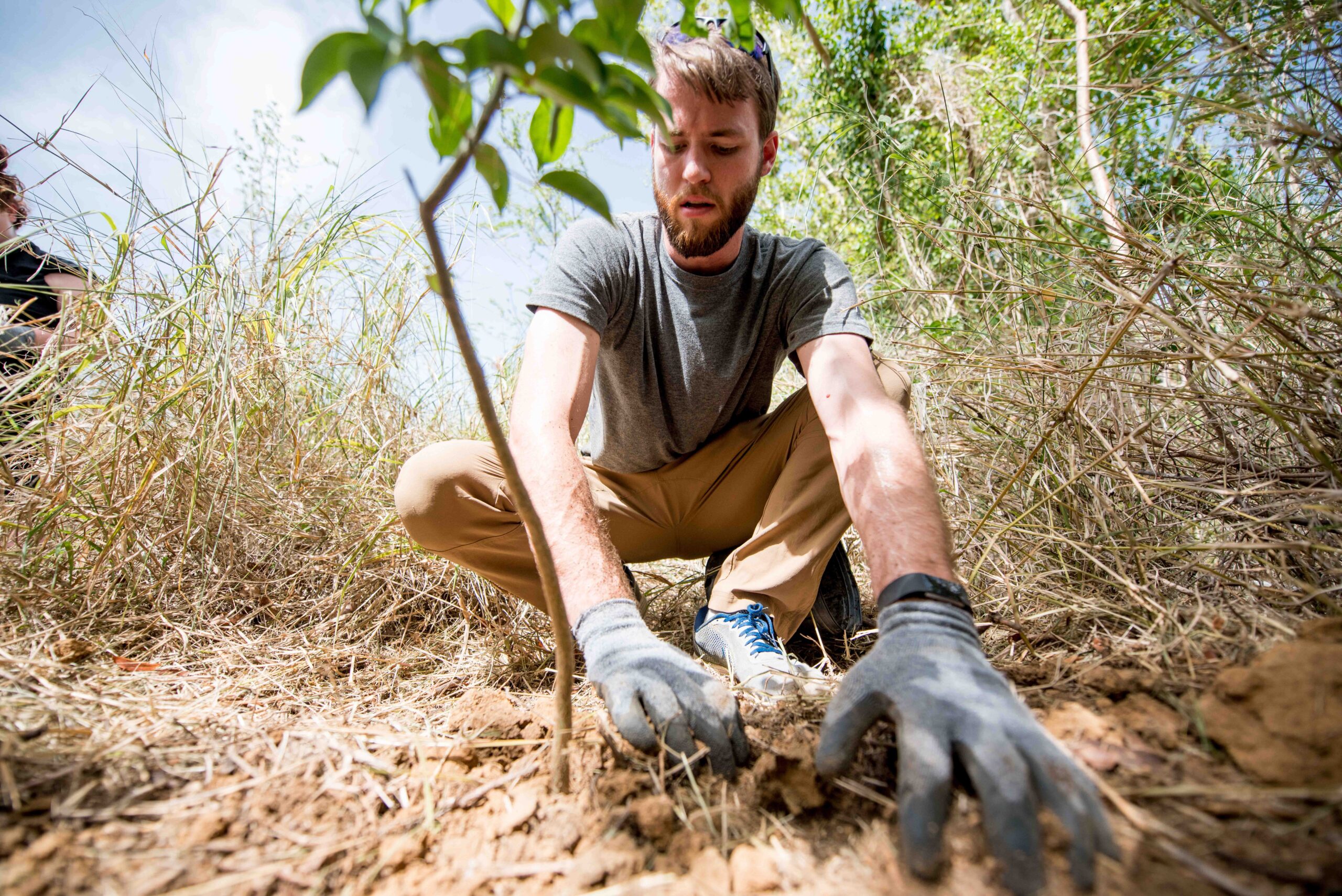
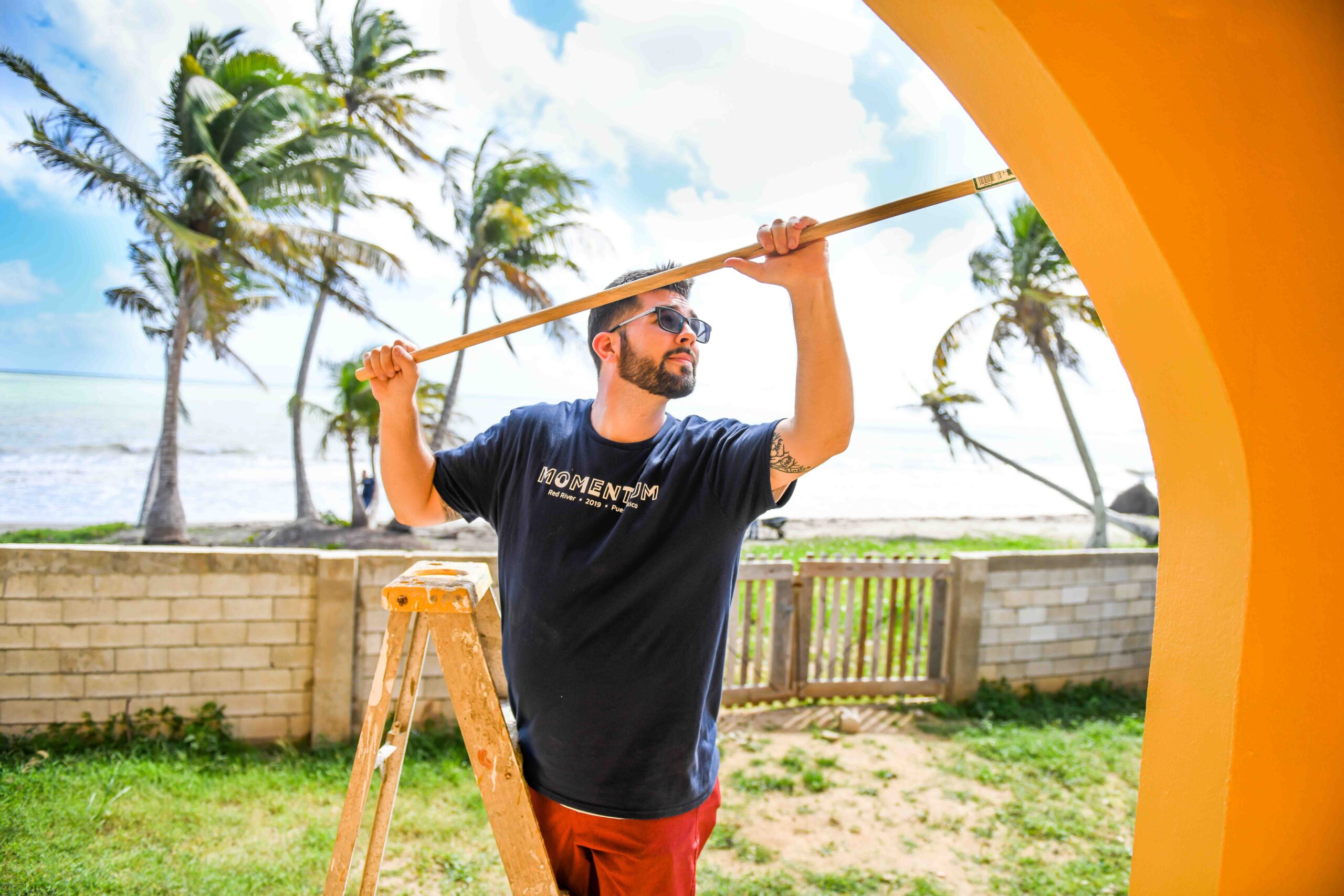
Insulating a floor, visiting the humane society, planting trees, painting a house.
The sites and the work that needs to be done vary, depending on the needs of a place. Usually, the students are visiting a disaster zone, a region where hurricanes, tornadoes, and flooding have struck recently. Work might include gutting a moldy house, clearing debris, installing sub-floor or drywall, or tree removal from trails at a state park. When disaster didn’t strike (Autumn of 2025 was an unusually quiet year), a reforestation project, the humane society, the Boys and Girls Club, the food shelf, any of these can put a team to work for a day or a week. A community center commissioned us to paint a mural beside a city street. One of my groups spent a week rebuilding reefs in the Gulf of Mexico for oyster habitat. There is always work to be done.
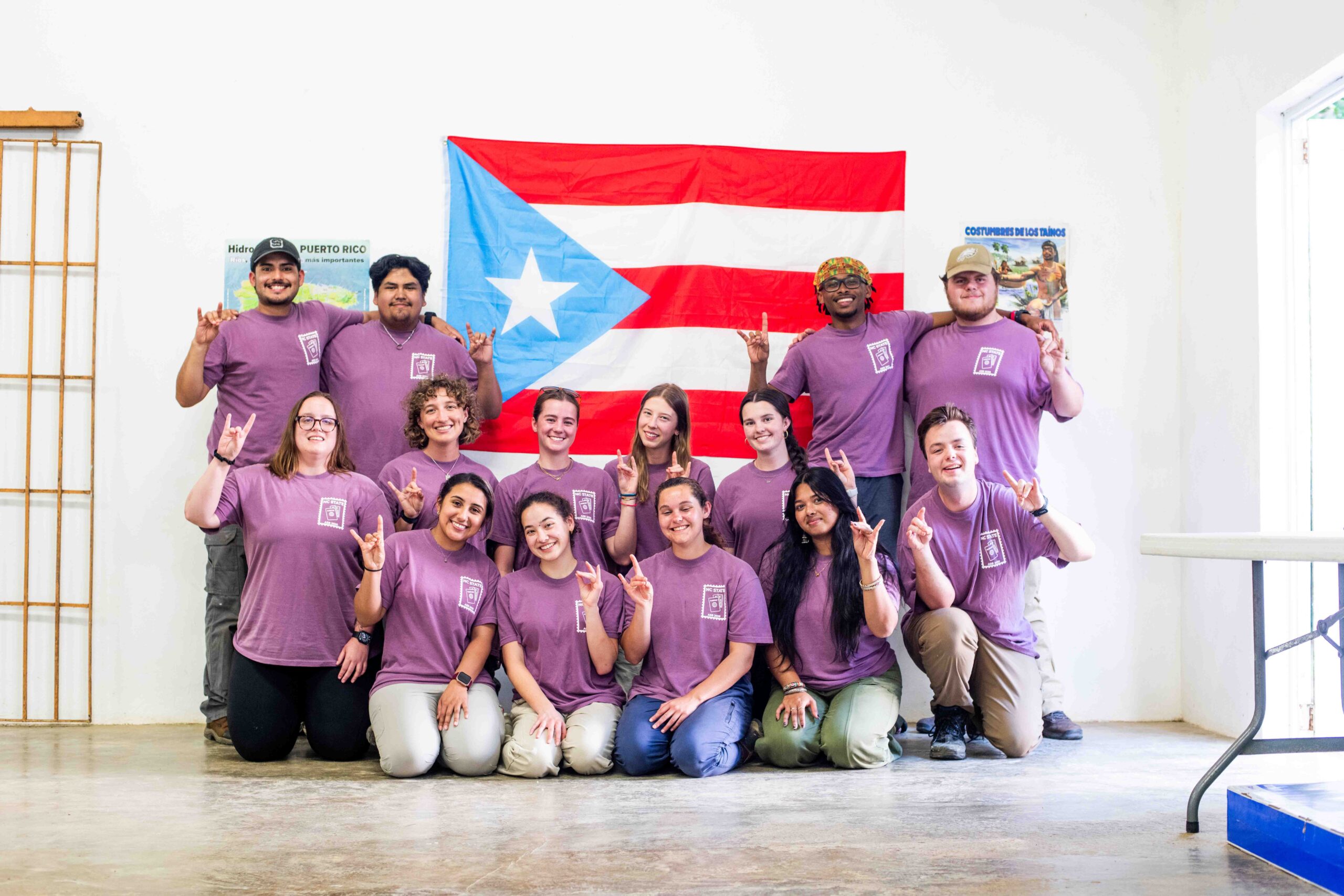
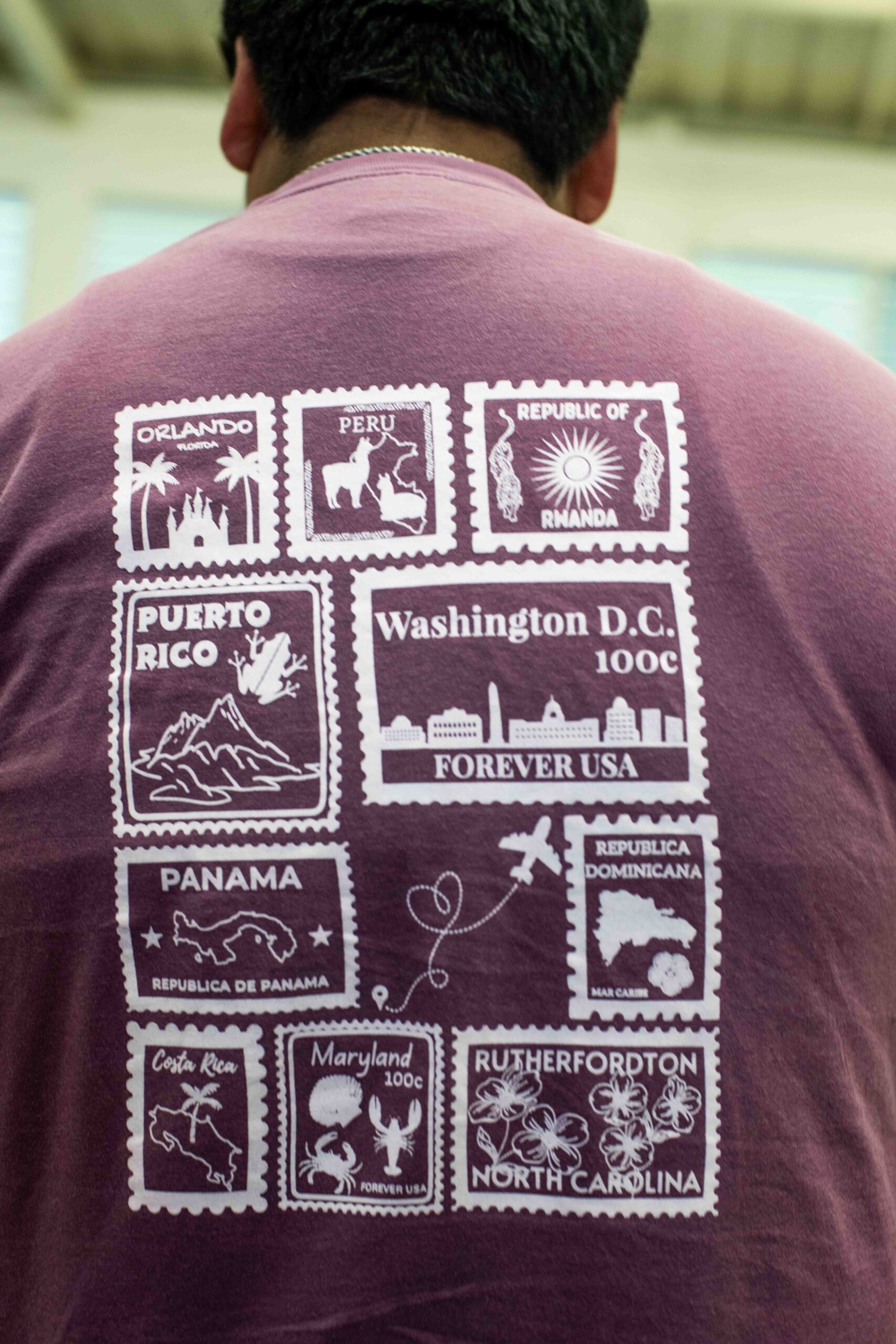
The group from North Carolina State University, photographed in Luquillo, Puerto Rico. The school has an exceptionally ambitious ASB program, as told by the back of their t-shirts.
I am not employed by the schools who visit. I work for Community Collaborations International, and we receive the students. When they arrive, we have their housing set up for them, and make sure they’re well-fed. We arrange ground transportation, as needed. We find their work and ensure that it is relevant and meaningful. Occasionally a work partner promises a “good job,” that will challenge and satisfy the students, and it turns out to be a dud. Sweeping a church (North Carolina, 2018). I do all I can to ensure that never happens. The best case scenario is that at the end of a sunny day, students return filthy, exhausted, and satisfied, knowing that they supported someone who truly needed it.
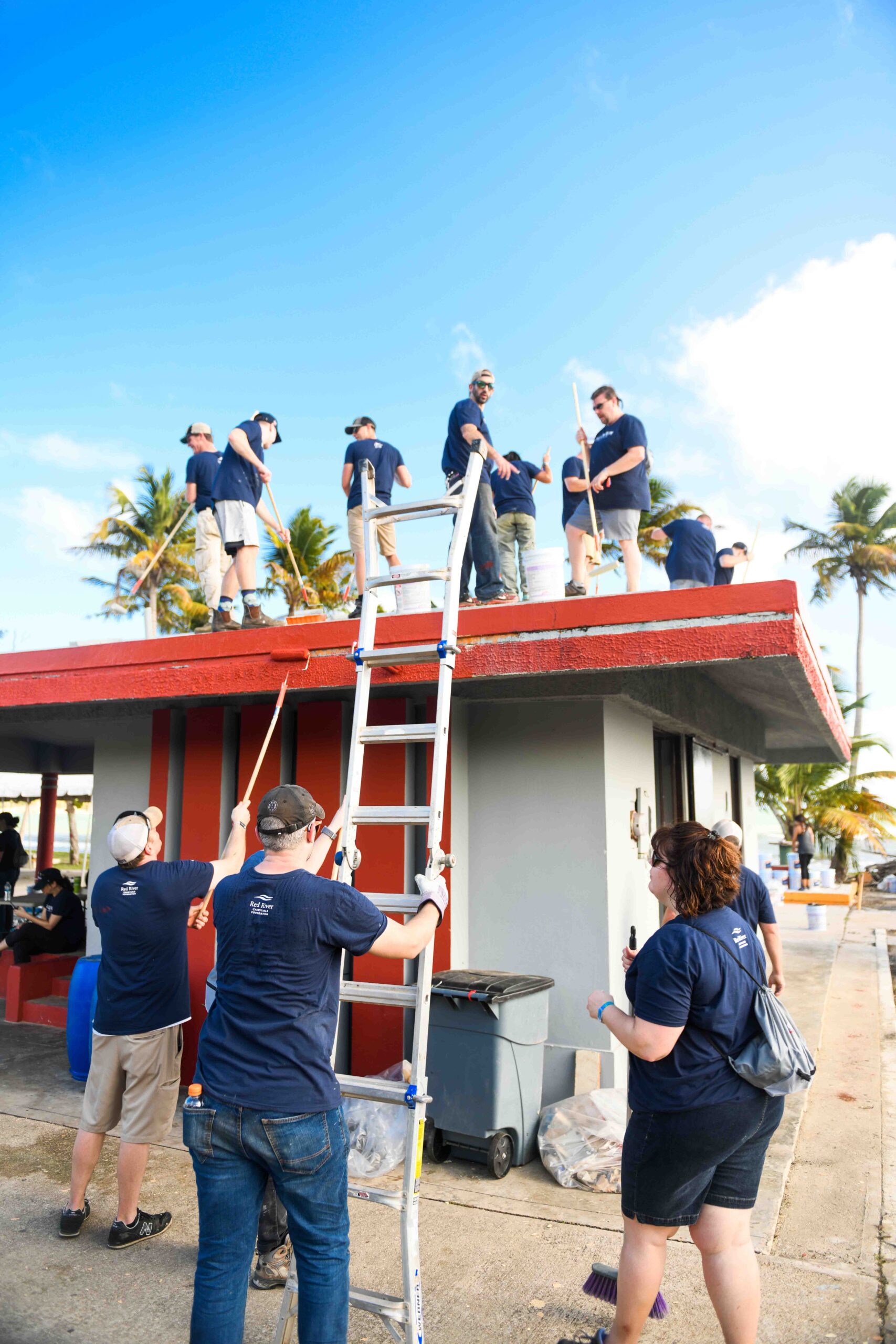
This group was comprised of 550 employees of a Massachusetts corporation. They spent a day transforming a small town on the east coast of Puerto Rico that had been scraped flat by Hurricane Maria.
CCI partners with Habitat For Humanity, NECHAMA Jewish Relief, Shepherd’s Purse, Catholic Charities, local charities, churches, and government bodies, anyone willing to work together. Our student groups come from small private colleges and large state universities. Students usually pay their own money for transportation and per diem fee, though sometimes the school offsets their costs.
For work partners and jobs we seek out neighborhood associations, local places of worship, food shelves. We network with the community, and often just happen upon neighborhood needs. I have worked in Houston, Mississippi, Kentucky, the Carolinas, Tennessee, Florida, and Puerto Rico. If you follow the hurricane season and the news, then you can guess where I’ll be next March. And there will be thousands of students from hundreds of schools who are ready to help, in similar circumstances, across the hemisphere.
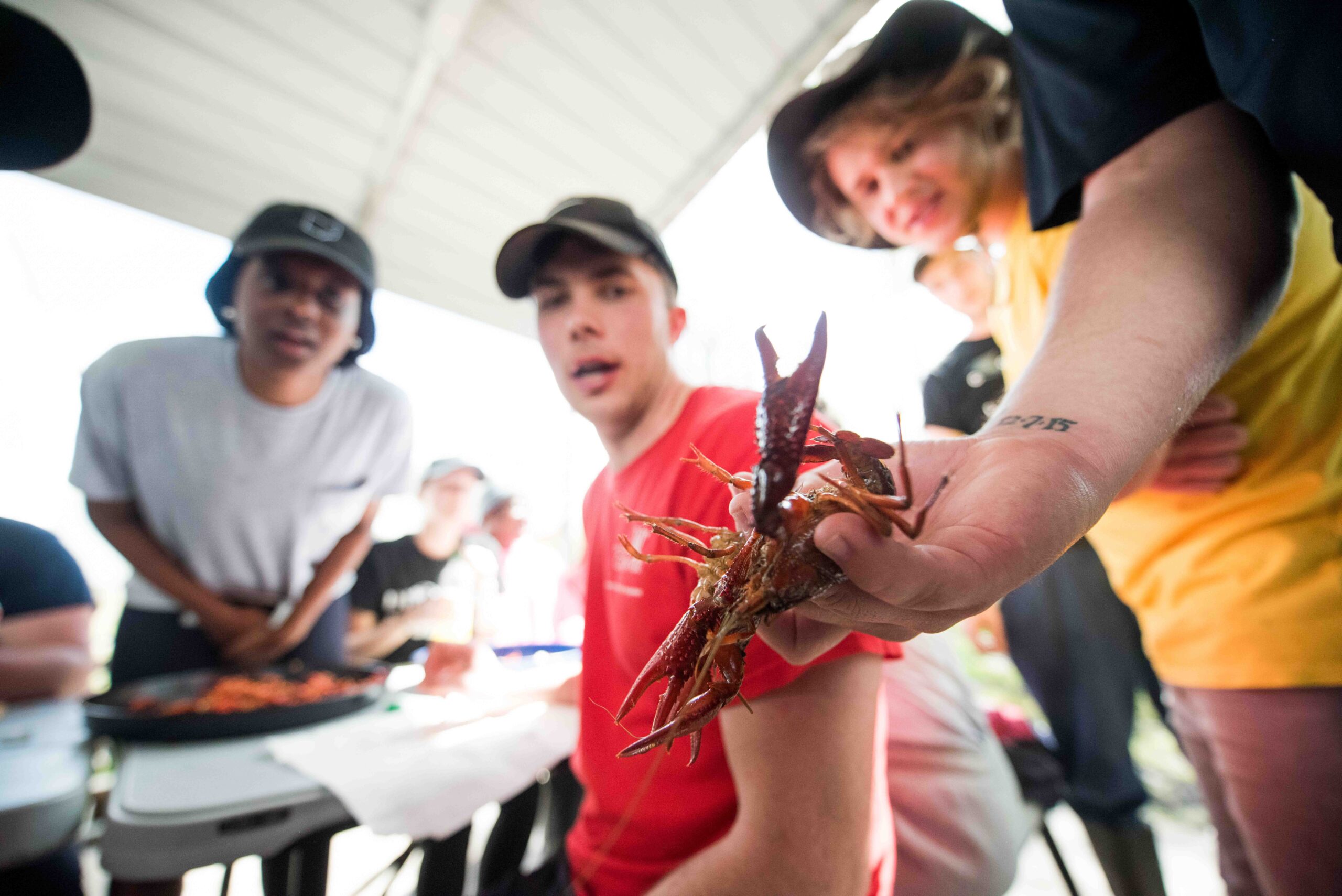
Most groups will take a day or a night off from their work to do something fun. These students enjoyed a crawdad boil in the Mississippi bayou.
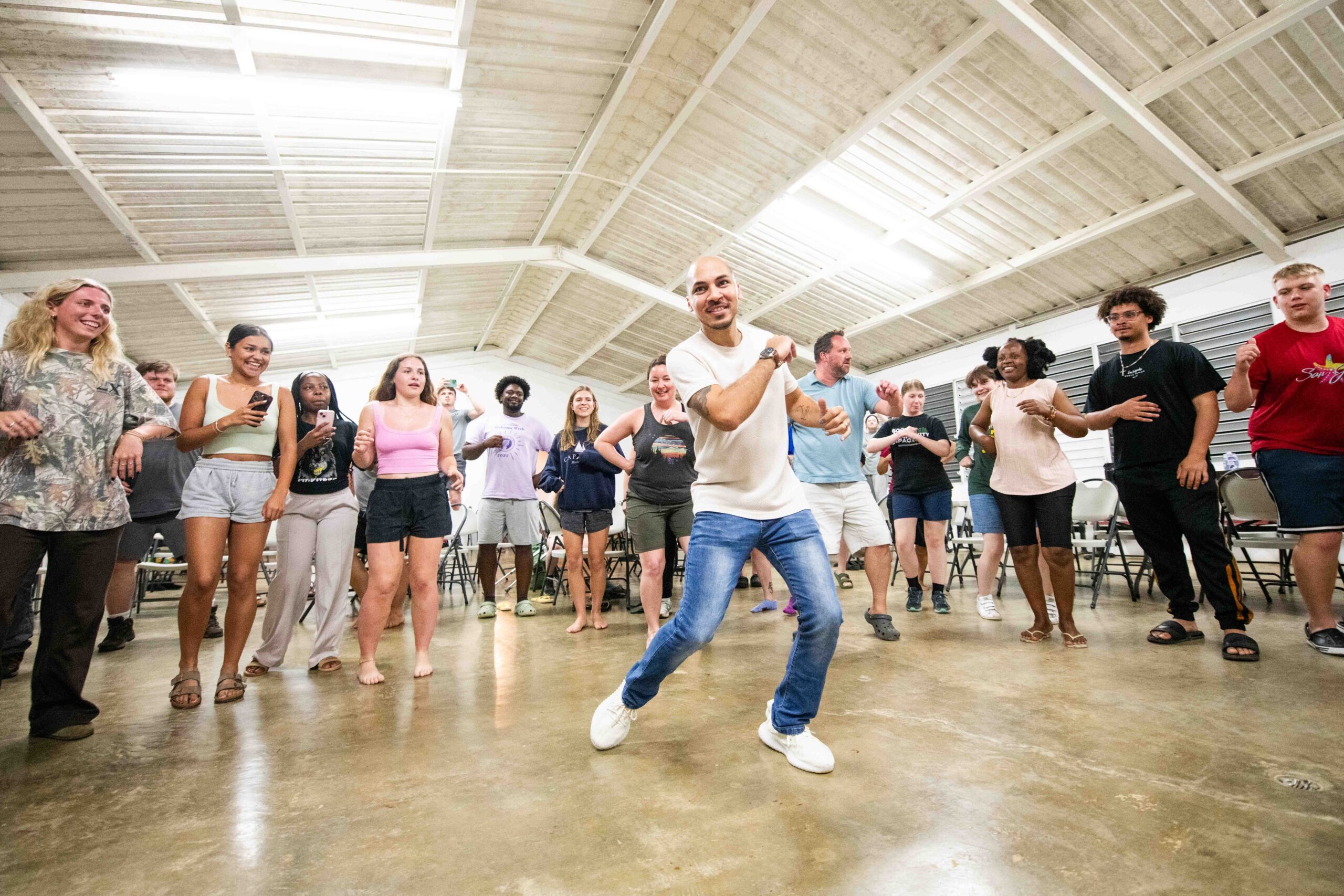
Learning to dance in Puerto Rico!
The best person in the world to work with is a college student who steps up and asks “how can I help?” They do this in a mud-filled house, in a muggy marsh, and in the kitchen back at camp.
When I hear someone speak of “young people” or “college students” or “Gen Z” in a general and negative way, I can only imagine they don’t actually know any of them. Sure, there are always takers, and people who don’t treat the rest of the world with respect. They might be following the example of some of their elders. I am privileged to know these volunteers, and my own kids, and their friends. I marvel at how much more they know than I did, and how much more they’re willing to do to meet the needs of their local and global communities.
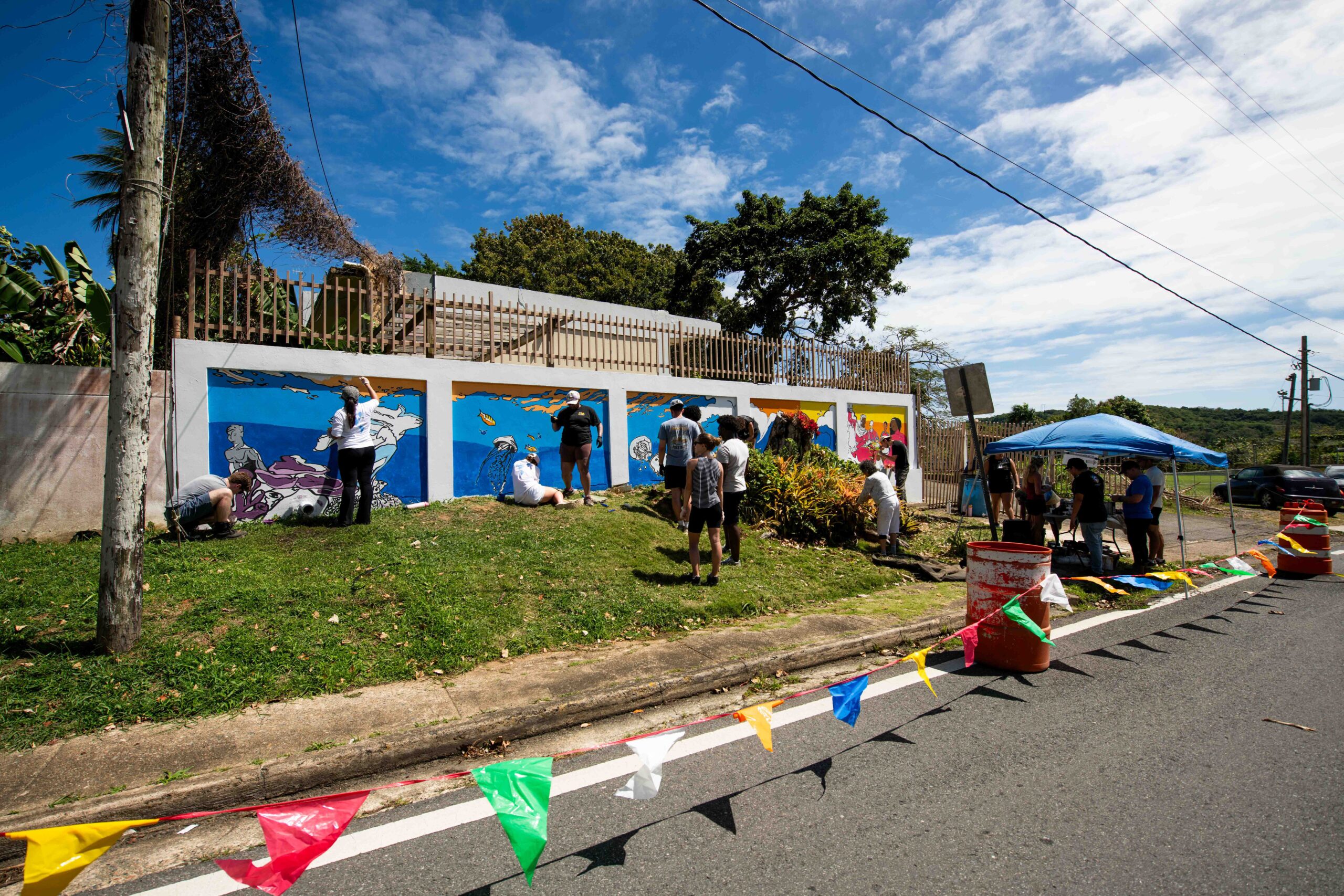
The mural project in Fajardo, Puerto Rico.
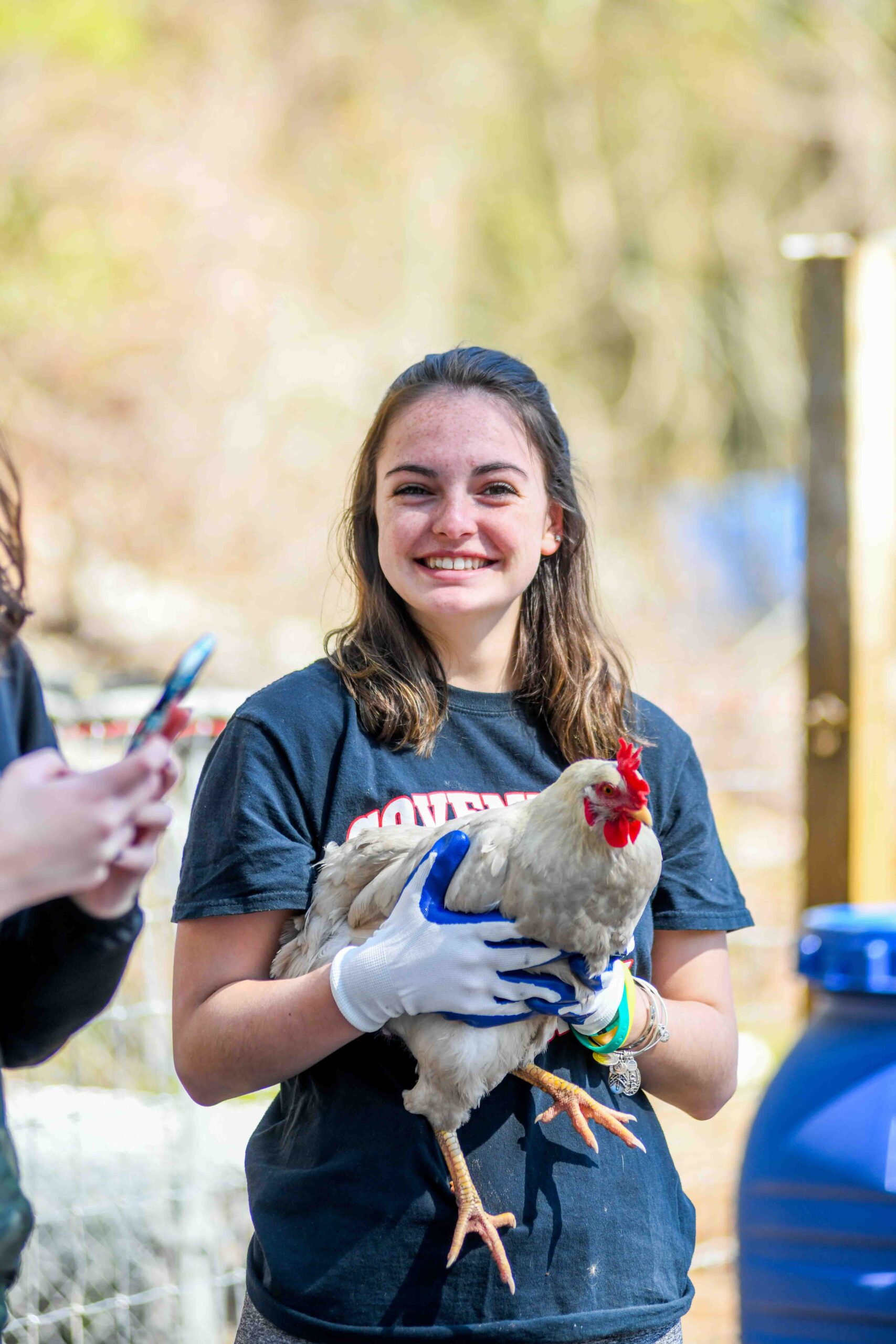
We should all learn how to hold a chicken.